
Sponsored Content
The Ashram Experience in India
Why serious yoga students are increasingly bypassing Rishikesh and Goa for an 18-acre riverside ashram set in an organic farm in the countryside of Mysore.
Every year, tens of thousands of aspiring yoga teachers travel to India in search of something deeper than a physical workout. For most, the journey begins in Rishikesh or Goa — destinations now crowded with hundreds of small, temporary schools competing through imagery, social media and fast-track certifications. Many students complete their training and quietly ask themselves the same question: did I actually experience yoga, or did I just finish a course?
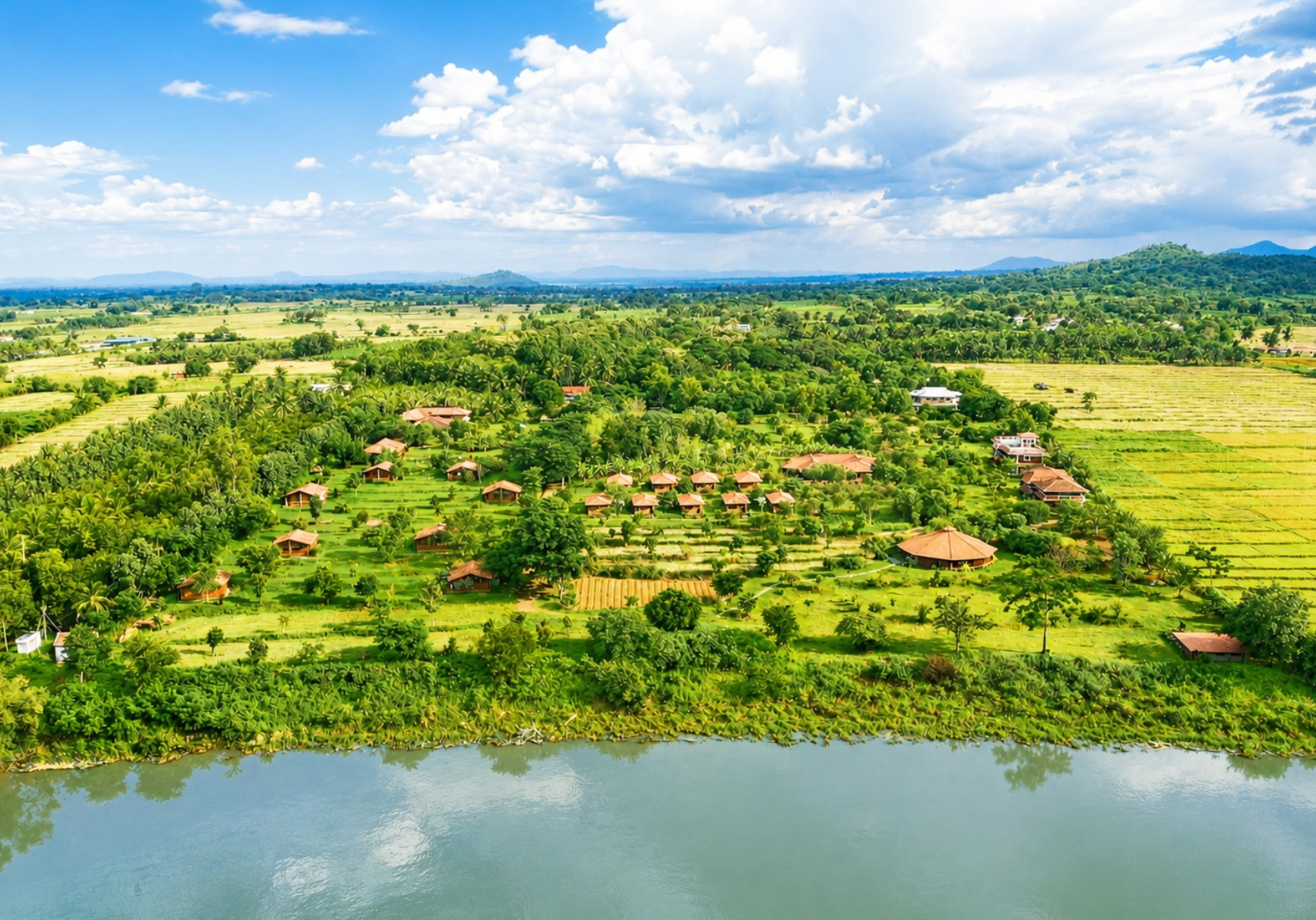
There is another India. One of organic farmland and river mist at dawn, of teachers who have spent decades in monastic disciplines, of small groups that genuinely know each student's name. That India lives at AyurYoga Eco-Ashram — 18 acres of riverside organic land on the banks of the River Kabini, one hour south of Mysore in Karnataka.
Fifteen Years. One Standard.
Since 2010, AyurYoga has delivered more than 115 Yoga Teacher Training courses (till May 2026), graduating over 2,000 students from upwards of twenty countries. A striking number return to deepen their practice, or send friends. That is not marketing. It is the kind of record that accumulates only one way — by never cutting corners.
The ashram's founder, Krishna Chaitanya, spent more than twelve years living in traditional Indian ashrams before opening AyurYoga — the Ramakrishna-Vivekananda monastic order in Kolkata, the Bihar School of Yoga in Munger, and the Himalayan Tradition in Rishikesh. He did not open a school after a weekend retreat. The resident teaching team reflects the same standard: every teacher carries a background rooted in monastic or long-term traditional practice, and all teach in fluent English.
Rather than revolving around a single personality or branded method, AyurYoga is a collective of teachers. Swami Prabodh, known for his teaching of non-dualistic philosophy, and Murthyji, who translates complex scriptural material into practical wisdom, both bring more than twenty years of monastic experience. Students are exposed to multiple authentic perspectives within traditional yoga, rather than being confined to one interpretation or style.
“A yoga teacher training should change how you live, not just what you put on your CV.” — KRISHNA CHAITANYA, FOUNDER
A Secular Sanctuary: Yoga Without Dogma
One of AyurYoga's defining qualities is its status as a strictly non-religious, non-sectarian ashram. Students are never required to worship a guru, participate in chanting, or adopt a particular belief. While the spiritual roots of yoga are honoured, the focus stays on the individual's internal experience and the science of the practice. It is, in this sense, a welcoming space for students of any tradition — or none.
50% Practice. 50% Philosophy.
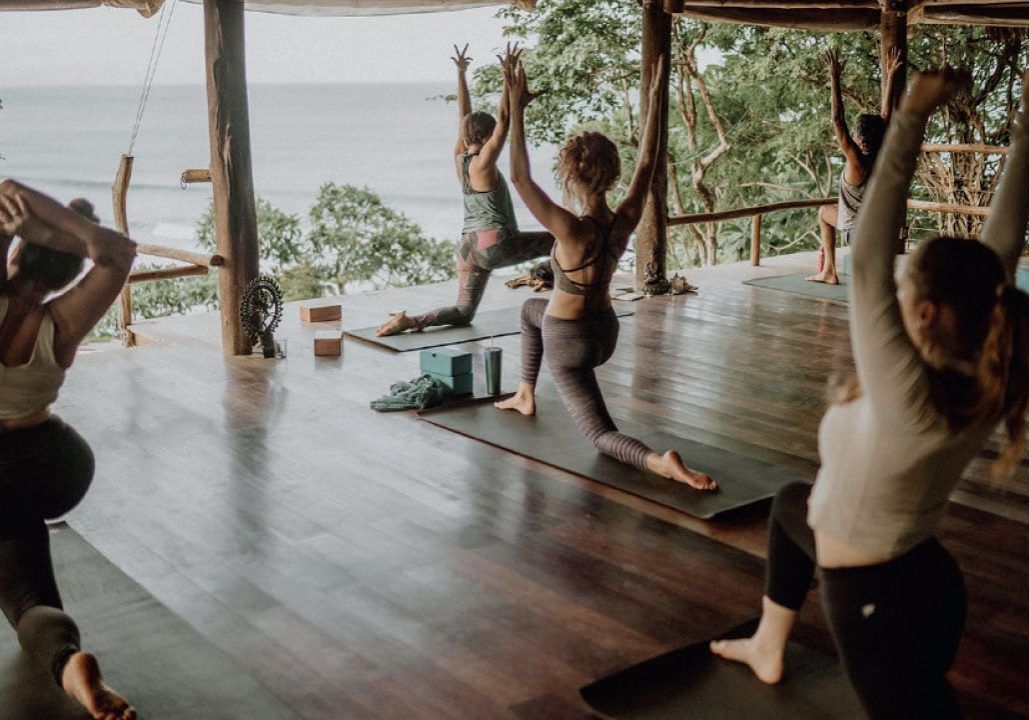
The 200-Hour Yoga Teacher Training runs over thirty days and is structured around a principle most modern schools quietly abandon: that the physical and the intellectual are inseparable. Half the programme is devoted to traditional Hatha asana with rigorous alignment, pranayama, sun salutations and teaching methodology. The other half covers yoga philosophy, anatomy, yogic psychology, Yoga Nidra, meditation and the practical application of yogic wisdom in modern life.
The 300-Hour Advanced Yoga Teacher Training, open to those who have completed a foundational certification, goes further: advanced asanas and pranayamas, kriyas, Patanjali's Yoga Sutras, the Bhagavad Gita, Sanskrit chanting, Ayurveda and yoga therapy. The daily schedule extends to ten hours and is widely described by graduates as one of the most comprehensive yoga immersions available in India today.
Eight Teachers for Twenty Students
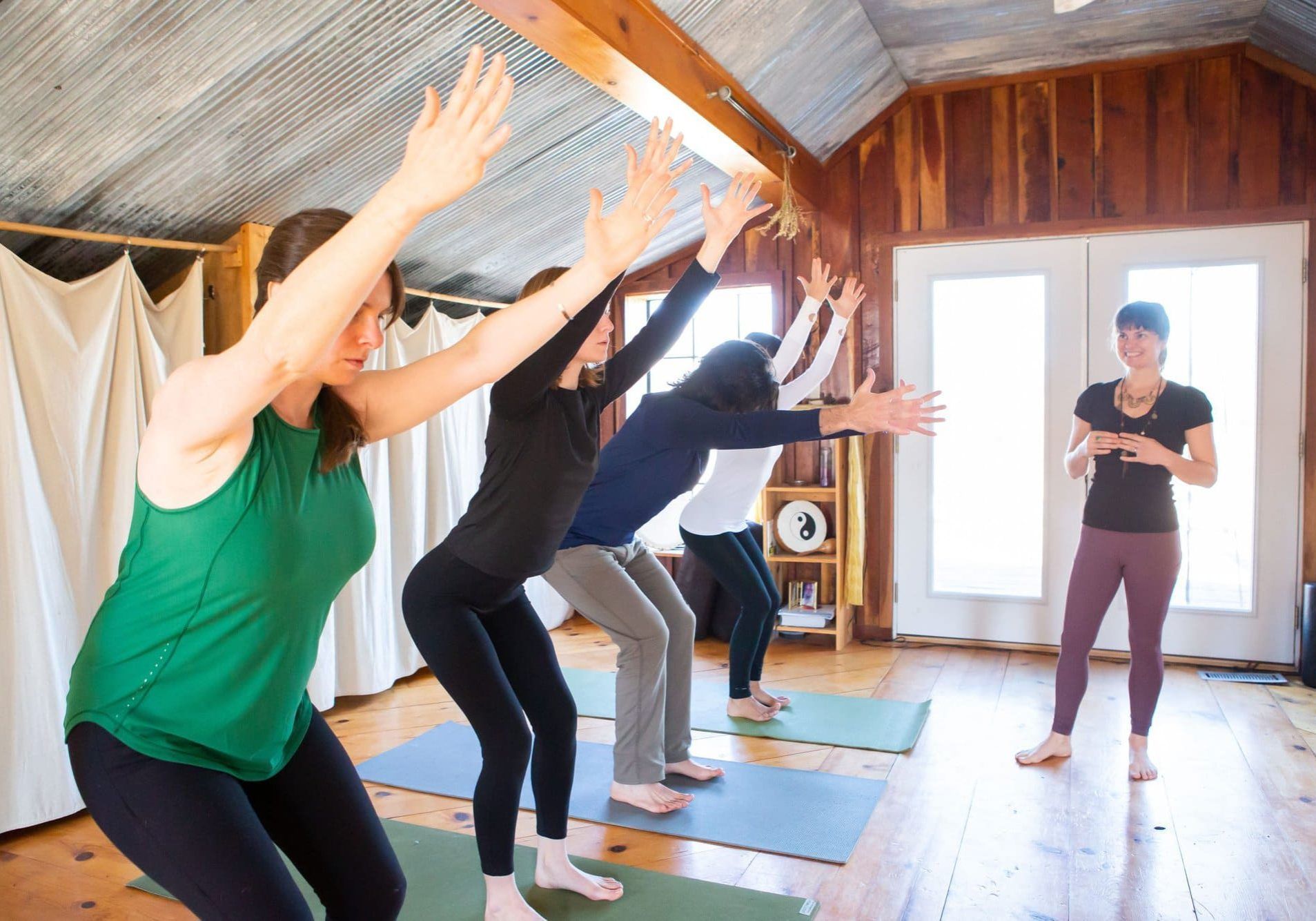
Most teacher training programmes — even well-regarded ones — run with two or three teachers for groups of twenty, thirty, sometimes more. AyurYoga maintains a ratio that is almost impossible to find elsewhere: eight resident teachers, with a maximum of twenty students per course. In practice, this means individual corrections in every asana class, real conversations with teachers after evening sessions, and the personalised attention that genuinely accelerates learning.
Authentic Ayurveda, in Expert Hands
On the same grounds, a fully equipped Ayurveda hospital operates year-round, helmed by two resident female Ayurvedic doctors and a team of Kerala-trained therapists. Guest numbers are capped at ten at any time — the level of individual care that classical Ayurveda demands. Every protocol begins with a detailed consultation, after which treatments, diet and herbal medicines are tailored to each guest's constitution (prakriti) and current imbalance (vikriti).
Retreat programmes run from seven to twenty-eight days and address a wide spectrum of wellbeing goals: Panchakarma detoxification follows the traditional five-fold purification process; Rasayana Rejuvenation focuses on cellular restoration and longevity; Stress Management and Weight Management retreats use Ayurvedic principles to support sustainable change; and customised medical retreats are designed for guests managing specific chronic conditions.
For those who want to understand Ayurveda rather than simply receive it, the 14-Day Ayurveda Foundation Course offers daily theory and practical classes, Ayurvedic cooking sessions and daily yoga — one of very few opportunities in India to study the science in this depth in two weeks.
Not Ready to Teach? Come Anyway.
The 14-Day Beginners Yoga Retreat gently introduces new students to traditional Hatha Yoga in a small group of no more than ten, supported by three to five teachers. The Intensive Yoga Retreat is designed for regular practitioners who want to deepen both physical practice and philosophical understanding, without the formal exams and teaching methodology required in a YTT.
A Setting That Cannot Be Replicated
The ashram sits at 700 metres above sea level on the banks of the Kabini, blessed with one of India's most agreeable year-round climates (20–30°C, moderate humidity). Eighteen acres of certified organic farmland surround the campus, with four open-air yoga pavilions, a medicinal herb forest, eco-cottages and vegetable gardens. The Western Ghats sit an hour to the west on the Kerala border.
Meals are vegetarian, sattvic, and largely grown on the land itself. Accommodation is comfortable without being a distraction — private eco-cottages with western bathrooms, solar hot water, Wi-Fi and filtered drinking water. The ashram is widely regarded as one of India's safest destinations for solo female travellers, with vetted drivers for all airport transfers, day or night, and round-the-clock team support.
AyurYoga is registered as a non-profit trust. The trust donates organic seeds to neighbouring farmers, runs free Ayurvedic clinics for local villagers, and supports schoolchildren in nearby villages with books and supplies. To stay here is, quietly, to contribute to something larger than your own transformation.
Five Reasons to Choose an Authentic Ashram
- Monastic expertise. — Learn from teachers including Swami Prabodh and Murthyji, each with twenty-plus years of traditional practice.
- No guru-worship. — A rare, strictly secular environment where personal freedom is prioritised over religious dogma.
- Bespoke Ayurveda. — Intimate healing with only ten guests at a time, overseen by qualified female doctors.
- Foundational learning. — Courses in Ayurvedic lifestyle and medicinal cooking that are unusually difficult to find elsewhere in India.
- Safety and ethics. — A registered non-profit running a secure, supported environment — especially for solo female travellers.
A Different Kind of Yoga Destination
In a global yoga industry increasingly shaped by branding, aesthetics and accelerated certifications, AyurYoga Eco-Ashram represents the path less travelled. A place where yoga and Ayurveda are still taught as a complete system of physical, mental and spiritual development — not rigidly sectarian, not commercially manufactured, not disconnected from its philosophical roots. For students seeking a grounded understanding of these ancient traditions, the banks of the Kabini offer something rare: the real thing.
QUICK GUIDE FOR TRAVELLERS
Location: Village JP Hundi, near Mysore, Karnataka. Fly into Bangalore (BLR).
Best Time to Visit: Year-round (20–30°C), with May to September offering smaller groups and the most attention per student.
What to Pack: Modest white or light-coloured clothing and a personal yoga mat.
Certification: Yoga Alliance RYS 200 / 300 / 500.
Contact ayuryoga-ashram.com · info@ayuryoga-ashram.com · +91 9986699849