
Yoga and ADHD
How yoga can lead to greater peace and focus. By Caroline Hire
When I look at yoga teacher friends, it’s surprising to discover how many of us are neurodivergent. We came to yoga long before we understood why we felt different.
Our bodies knew before our minds did that yoga felt like coming home. It provided a respite from the pace and distractions of life – a quieting of the mind, a deeper understanding of our feelings and needs and a way to meet ourselves.
Like many ADHDers we’d been disappointed by superficial ‘solutions’ — finding yoga offered a more reliable source of stability.
Seeking solutions
Challenges faced by people with ADHD aren’t just practical. Focus, procrastination, emotional reactivity and impulsivity, can be debilitating but they also invite frequent misunderstanding and judgement.
Years of trying to fit in or failing to meet the expected standard often leads to shame, self-criticism and despondency. There’s a common belief that it’s simply a matter of trying harder or finding the perfect strategy, but that overlooks what’s happening at a biological level.
The role of yoga for ADHD
With or without medication, a regulated nervous system is at the heart of managing ADHD.
When the nervous system is in its optimal state, the mind is calmer, more focused and better able to access the thought processes needed to navigate day-to-day living – the exact same thought processes that can be problematic for ADHDers.
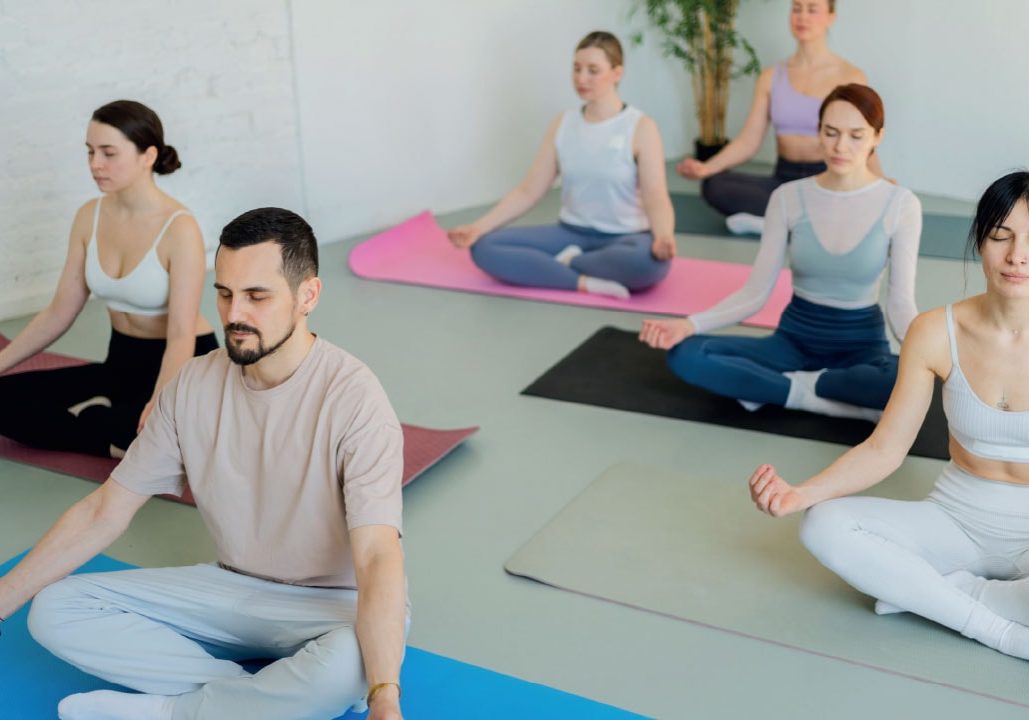
Yoga offers a wealth of practices that can support the nervous system. Mindful movement, breathwork, meditation and introspection are useful tools for creating the foundation upon which effective behavioural change can happen.
A different way of looking at ADHD
From my work both as an ADHD health coach and yoga teacher, I’ve come to understand that there isn’t a lot of point in building strategies, or relying on productivity apps, planners and calendars, until we’ve attended to the nervous system. This lays the foundation for practical solutions to practical problems.
At the start of every session with clients, I bring in a grounding practice — a seated body scan to calm the mind and access the deeper wisdom that lies within the individual. Over a number of sessions, we work together to find the tools that resonate so they can develop their own regular practice.
Once this is established, only then is it time to move on to practical tools.
Why starting with practical tools doesn’t work
Managing ADHD is often looked at through the lens of the brain’s ‘executive function’, which takes place in the pre-frontal cortex. This collective term describes the thought processes we need to get started on tasks, organise, plan, prioritise, keep track of information, manage impulses and regulate our emotions.
Many ADHDers experience issues in some or all of these areas and this can lead to very real and practical problems in day-to-day living.
It can be tempting to go straight to tackling the behaviour that is showing up as a problem, but this won’t work if we ignore what’s going on behind the scenes.
When we’re stressed, the amygdala, or ‘emotional brain’ takes over, and we move into reactive mode. Meanwhile, the pre-frontal cortex, our ‘thinking brain’ takes a back seat, and the functions which were already hard to access become even harder.
If we try to layer on a strategy, we’re doing it at a time when we’re least likely to know what will work for us or have the capacity to follow through.
So where do we start?
Whether you’re ADHD or not, if you struggle with overwhelm or reactivity, building in nervous system regulation as part of your day, can help you access those calmer, clearer mind states where responding rather than reacting feels easier.
Regularity and rhythm are key. If you find ‘routine’ boring or hard to stick to, choose what feels easiest and start there. A low-effort access point is an activity you can do in bed before you even start your day. Physiologically, breathwork can facilitate a move into a calmer nervous system state and choosing either samma vritti (equal in-breath to out-breath), or a practice like bhramari breath (where the exhale is longer) is ideal for this purpose. Even a few minutes first thing in the morning can make a profound difference to how the day unfolds.
Regular meditation has been shown not only to settle the nervous system but also to strengthen the pre-frontal cortex, providing both relief in the moment and in the longer term.
For some, sitting still can trigger agitation and this is where yoga asana comes in. Rhythmic movement, especially when combined with breathwork and mindfulness, is another tool that offers ADHD regulation, and is why even an active practice can be deeply soothing.
Checking in
Not to be overlooked is the introspective nature of yoga. ADHDers can have differences in their sensory perceptions of the world – meaning they may experience internal and external cues more loudly or miss them altogether.
This is why checking in with our experience at intervals throughout the day can be extremely powerful.
Yoga helps us to refine our interoception but when we don’t have time for formal practice, even a few moments to pause, breathe and notice what we’re feeling and needing can create a reset and take care of anything that has arisen before it builds into overwhelm or exhaustion.
Santosha: the path to acceptance
I’d like to end with one more gift yoga gives us: Santosha, the acceptance of life as it is.
When clients first come to me they’re often experiencing significant difficulties. Through returning to a more regulated nervous system, I’ve seen greater compassion arise.
This, in turn, leads to an acceptance and even love for their unique experience, letting go of the comparisons of what they’d believed should be. This is the gateway to a life that works in harmony with their brain and body. From there, new possibilities open up.
Caroline Hire is a functional medicine health coach, EFT practitioner and yoga teacher, specialising in ADHD. The focus of her work is nervous system regulation, alongside exploring the beliefs that drive behaviour, helping her clients find a more aligned and easeful life with ADHD.
Visit: carolinehire.com

Om Magazine
First published in November 2009, OM Yoga magazine has become the most popular yoga title in the UK. Available from all major supermarkets, independents and newsstands across the UK. Also available on all digital platforms.