
Trauma Transformed
Why the body and mind must heal together: how somatic practices like yoga and breathwork can complement talking therapies in healing past trauma. By Andrea Clark
There’s a quiet shift happening in the way we understand healing. For a long time, therapy focused mainly on talking: making sense of our thoughts, behaviours and past experiences. And this matters. Being able to put words to what we’ve been through, to feel heard and understood, can be incredibly powerful.
But over time, our understanding has deepened. We’ve come to see that trauma isn’t only something we think about — it’s something we carry in the body, too. The work of people like Dr. Bessel van der Kolk, alongside others in the field, has helped bring this into awareness. Their research shows that trauma doesn’t just shape our thoughts; it affects our nervous system, our physical responses and the way we experience safety.
So while understanding our story is important, it’s only one part of the picture. This is where talking therapy and somatic approaches, like yoga and breathwork, begin to meet — one helping us make sense of what happened, the other helping the body release what it has been holding onto. Together, they offer something more complete.
Trauma lives in the body
When we go through something overwhelming, the body steps in to protect us. It might move into fight, flight, freeze, fawn, or even collapse — automatic responses that happen without us having to think about them. At the time, they’re there to help us survive. But sometimes those responses don’t fully switch off once the danger has passed. The body can stay on high alert, or move into a kind of shutdown. You might notice this as anxiety, restlessness, numbness, or feeling disconnected from yourself. Talking can help us understand why we feel this way. But it doesn’t always reach these deeper, physical patterns. That’s where body-based approaches can gently support the process — helping the nervous system begin to feel safe again.
When the mind knows, but the body doesn’t
One of the most confusing parts of trauma is this: you can know that you’re safe, and still not feel it. You might understand your past, recognise your patterns, even be able to explain them clearly — and yet your body still reacts. There’s tension, anxiety, or a sense of being triggered that doesn’t quite make sense.
This isn’t a failure or something you’re doing wrong. It’s your nervous system doing exactly what it learned to do. Trauma isn’t just about what happened, it’s about how your body adapted in order to cope. And those adaptations, as protective as they once were, don’t always update on their own.
Listening to the body
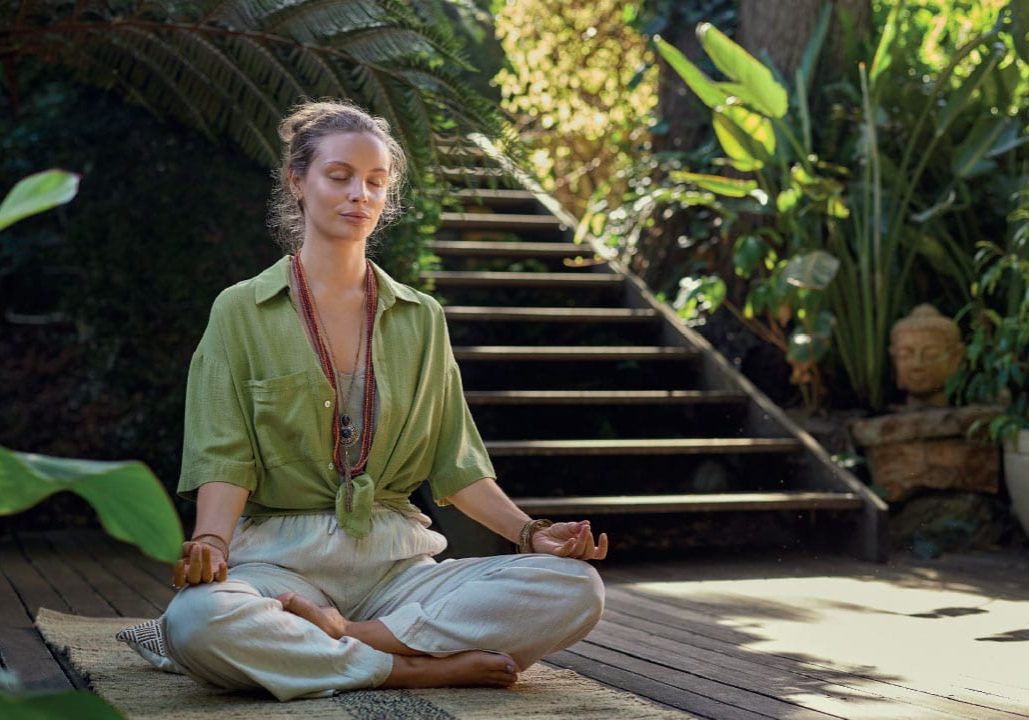
This is where practices like yoga, breathwork, and somatic therapy can feel different. They don’t begin with analysis or trying to figure things out. Instead, they invite you to notice what’s happening in your body, gently, at your own pace. Through small moments of awareness, something begins to shift. The breath softens. Muscles release. There’s a little more space where there once was tension. For many people, there’s a quiet realisation: my body has been holding this for a long time. And often, that awareness alone is the beginning of change.
Making sense of our experience
At the same time, insight still matters. Therapy gives us space to reflect, to explore patterns and to understand where they began. It helps us make sense of our relationships, our coping strategies and the beliefs we’ve formed about ourselves along the way. We begin to ask questions like: Why do I respond this way? Where did this pattern come from? What did I learn about myself growing up? Because trauma doesn’t only live in the body — it shapes how we see ourselves, and how we move through the world.
Why both matter
Healing tends to deepen when these two approaches come together. If we only focus on understanding, we might have insight but still feel stuck in the same emotional loops. If we only work with the body, we might feel calmer, but not fully understand what’s been driving those patterns. But when we begin to work with both, something shifts. We can start to feel safer in ourselves, while also understanding why we didn’t before. We can release what the body has been holding, while gently reshaping the story we tell about who we are. It’s not about choosing one or the other, it’s about allowing them to support each other.
Where it often begins
So much of what we carry didn’t start in adulthood. It began in our earliest relationships, in the subtle ways we learned about safety, connection and belonging. As children, we adapt. We learn what gets us love, what keeps us safe and what we need to do to be accepted. Those adaptations stay with us. So when something feels like a ‘trigger’ now, it’s often not just about the present moment. It’s something older being touched, an unmet need, a familiar feeling, a learned way of protecting ourselves.
Turning towards ourselves
At the heart of this work is a gentle shift. Instead of pushing these parts of ourselves away, we begin to turn towards them. The anxious part. The part that tries to please. The part that feels like too much — or not enough. These aren’t flaws. They’re parts of you that learned how to cope the best way they could. Healing isn’t about getting rid of them. It’s about getting to know them, understanding them, and slowly learning to respond with more kindness.
Coming back to yourself
Yoga can help you reconnect with your body. Therapy can help you understand your story. Together, they offer something deeper. A way of coming back to yourself. A way of feeling a little more at home in your body. A little more understanding of who you are and why. A little more choice in how you respond to life.
A gentle invitation
If something in this resonates, it might be a sign that a part of you is ready to explore this more deeply. I’ll be sharing more about this in an upcoming online course this summer, focused on inner child healing and shifting long-held patterns, bringing together both psychological understanding and body-based work. But for now, there’s no rush. Sometimes it begins with something very simple: noticing your breath; softening your body, just a little; being curious about what you’re feeling, instead of judging it. Because healing isn’t about fixing yourself. It’s about learning to meet yourself in a different way.
Andrea Clark is a BACP-registered trauma therapist, specialising in CPTSD, codependency and addiction, and an integrative therapist trained in person-centred CBT, EFT, EMDR and inner child healing. She offers in-person sessions in East London, Essex and online via The Healing Nest.
* New online course coming this summer: Coming Home to Yourself: A Gentle Guide to Inner Child Healing & Self-Worth after Abuse. Learn more at: TheHealingNest.co.uk

Om Magazine
First published in November 2009, OM Yoga magazine has become the most popular yoga title in the UK. Available from all major supermarkets, independents and newsstands across the UK. Also available on all digital platforms.