The Modern Dilemma
Do you really need a Yoga teacher training to become a Yoga teacher?
In today’s world, Yoga teacher trainings are everywhere. From 10-day intensives in Bali to 200-hour certifications across the UK, the options are endless — and so is the confusion. So let’s ask a more honest question: Do you even need a Yoga teacher training to become a ‘real’ Yoga teacher?
Short-format trainings have made Yoga more accessible than ever. But they have also created a quiet contradiction. Can someone truly become a teacher in 10, 15, or even 27 days? Neuroscience suggests we retain only a fraction of what we hear, and progressively more when knowledge is practiced, lived and integrated over time. A certification may mark completion, but it does not guarantee depth, embodiment, or the ability to guide others.
WHERE YOGA WAS LIVED, NOT LEARNED
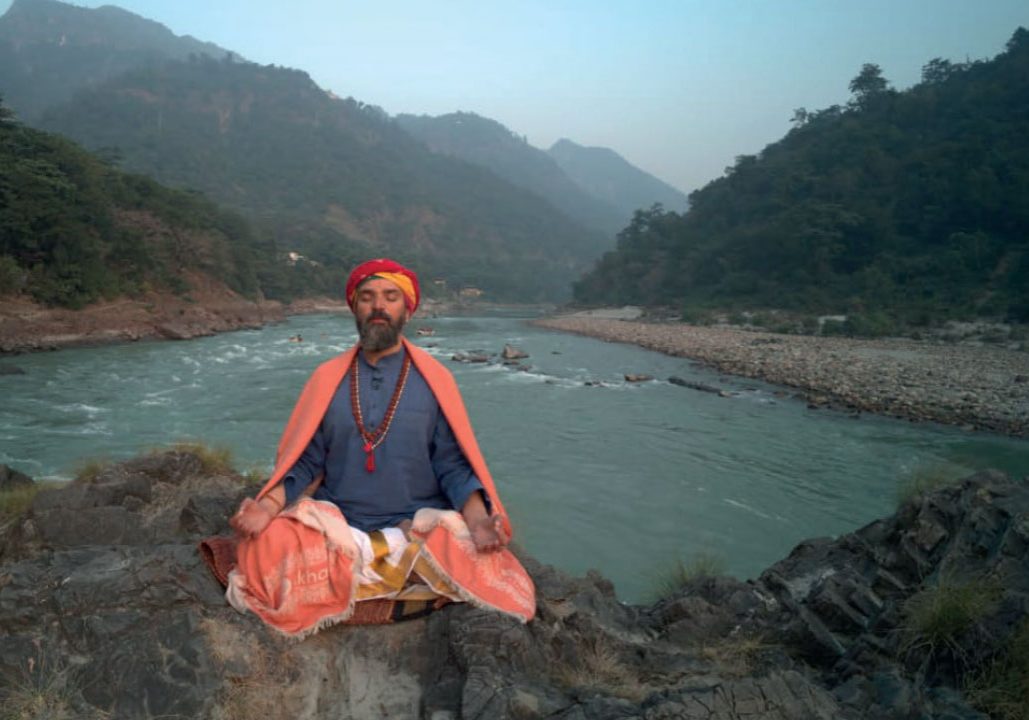
Traditionally, Yoga was not pursued as a career, it was a path of self-inquiry, where the body, mind and soul were brought into alignment to experience lasting wellbeing. Students immersed themselves in daily Yogic Dinacharya: rhythms of practice, breath, food, silence and study, guided by teachers who had lived the path over decades. Places like the Himalayan foothills, along the banks of the blue-green Ganga in Rishikesh, were natural environments for this exploration. Yogis gravitated there over thousands of years, not for certification, but for their deeply supportive, Pranic environments. In such spaces, something more than techniques was understood; an intuitive relationship with who you really are began to unfold.
BEYOND ASANA: THE SUBTLE TRANSMISSION
Many modern trainings focus on posture, including physical anatomy and alignment. A small subset look at how to bring those postures together for a sequence that works. Posture and sequencing is important, but they are only a few notes of the song. Within authentic environments and lineages, there is a deeper transmission, something not easily defined yet deeply and unmistakably felt. A sensitivity to:
- your deeper desires and suppressed emotions
- how energy moves through the many layers of your body
- what disperses your attention — and your capacity to bring your ideas into committed action
This is the difference between learning about Yoga and beginning to live it.
FROM LEARNING, TO BECOMING, TO TEACHING
Traditionally, one did not begin with the intention to teach. One began by asking: Who am I? How do I understand and regulate my own energy? Only after learning how to learn — through observation, practice and integration — did teaching emerge naturally. A Yoga teacher is not created through hours completed, but through awareness cultivated.
THE ROLE OF PLACE AND DISCERNMENT
India remains the source of Yoga through continuous living traditions. From Ashtanga in Mysore, to Iyengar in South India, to Ayurveda in Kerala, and subtle practices such as Pranayama, Kriya, Bandha, and Tantra within Himalayan lineages — each carries depth shaped by time and experience.
Rishikesh offers a rare confluence of environment, tradition and teachers who have preserved these systems. Yet, as with many ancient traditions, such spaces also attract commercial offerings, often competing on price rather than depth. Discernment becomes essential. Who are the teachers? How long has the lineage been lived and shared? What support exists beyond the training itself? Is there space for advanced learning and ongoing mentorship?
A FINAL REFLECTION
A training can be a powerful beginning, but it is not the destination. You do not become a Yoga teacher by completing a course. You become one through the ongoing process of understanding yourself, and learning how to guide others with integrity.
This journey is rarely walked alone. A supportive community, access to experienced mentors and spaces to continue questioning and refining your practice are essential to transforming knowledge into lived wisdom.
The question is not simply which training to choose, but how deeply are you willing to learn?
Explore authentic teacher trainings with Akhanda Yoga Institute at: akhandayoga.com


Om Magazine
First published in November 2009, OM Yoga magazine has become the most popular yoga title in the UK. Available from all major supermarkets, independents and newsstands across the UK. Also available on all digital platforms.