Yoga For the Battlefield
If we spend our lives looking after the battlefield but never the soldiers, perhaps we're beginning in the wrong place.
Reading time: 4 minutes
Everyone waits until they’re already overwhelmed.
We wait until we’re exhausted before we rest. We wait until we’re anxious before we breathe. We wait until we’ve lost our patience before remembering our yoga practice.
But what if yoga invited us to begin much earlier?
What if we started at the front line?
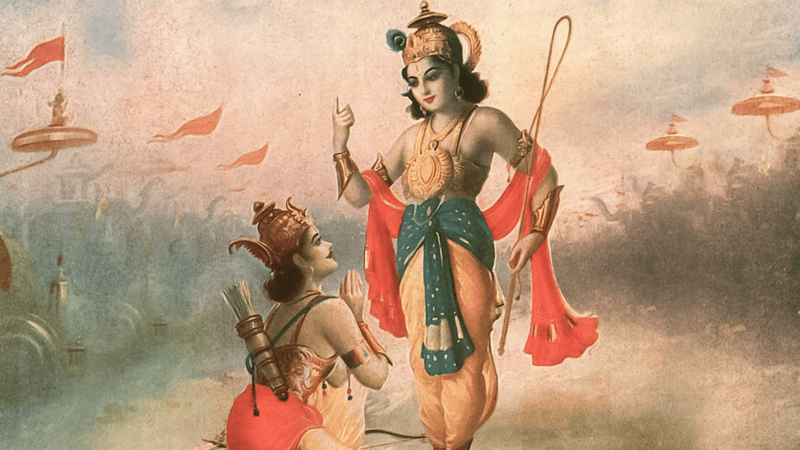
The Bhagavad Gita doesn’t begin in a cave, a studio, or a mountain top. It begins on a battlefield. Before Arjuna moves, before Krishna speaks of yoga, there is simply a human being overwhelmed by what is unfolding in front of him.
Perhaps that’s why yoga has always felt so practical to me.
Not because it helps us escape life, but because it helps us meet it.
And the first to meet every battlefield aren’t our thoughts. They’re our senses.
The Front Line
In yoga, the five senses are known as the jñānendriyas—the faculties of knowledge. I sometimes think of them as our intelligence-gathering senses. Long before we have time to think, analyse or react, they're already collecting information about the world around us.
Before we think, react or speak, our senses have already begun gathering information.
Every sound.
Every sight.
Every smell.
Every taste.
Every touch.
Long before we become consciously aware of them, they are already working on our behalf.
Perhaps that's why the yogic tradition gave them such importance.
Because if we begin to understand what we're taking in, we begin to understand ourselves.
Yoga often translates Āhāra as nourishment. We tend to think of nourishment as the food on our plate, but perhaps it's time to widen the menu.
Every conversation we overhear.
Every headline we scroll past.
Every piece of music.
Every fragrance.
Every beautiful view.
Every comforting touch.
Our senses are constantly feeding us.
Long before we consciously choose how to respond, our jñānendriyas have already gathered their intelligence.
In my own teaching, I affectionately call them the Five Soldiers.
Not because they're fighting the world, but because they're always on the front line of every battlefield we face. They are the first to meet the queue at the airport, the difficult conversation, the crowded supermarket, the unexpected phone call or text mesage, the joyful reunion and the quiet walk through the woods.
If we spend our lives looking after the battlefield but never the soldiers, perhaps we're beginning in the wrong place.
Of those five soldiers, the one that has always fascinated me most is the one I call the Memory Keeper.
Our sense of smell has a remarkable way of reaching into places words often cannot.
The scent of fresh rosemary might take you straight back to your grandmother's kitchen.
A favourite perfume can bring someone back into the room years after they've gone.
The smell of chlorine can transport you to childhood holidays.
Walk into a second-hand bookshop or a charity shop and, for a moment, you're surrounded by fragments of other people's lives. Old pages, wooden shelves, well-loved jumpers, forgotten perfumes, all redolent of lives once lived. Every scent quietly carrying a story.
It feels as though we're walking through other people's memories.
Science gives us one explanation. Unlike our other senses, smell has particularly direct connections with parts of the brain involved in emotion and memory, including the amygdala and hippocampus. Perhaps that's why a single breath can sometimes unlock something that years of thinking never quite could.
It's one of the reasons I call it the Memory Keeper.
In many traditional chakra teachings, smell is associated with the earth element and survival.
I rather like that.
We still speak about feeling grounded. We talk about standing on solid ground, or feeling as though the ground has been pulled from beneath our feet. Language has always understood what the body knows.
Perhaps reconnecting with the earth doesn't require a mountain retreat after all.
It might simply be stepping outside after summer rain and breathing in petrichor—that unmistakable scent released when rain meets dry earth. Scientists call one of its key compounds geosmin (earth odour), but I rather prefer its poetry. Some believe our remarkable sensitivity to geosmin may have helped our ancestors locate fresh water and fertile ground. Long before we had the language for safety, perhaps the earth itself was already whispering, “Life is possible here”.
Or perhaps it's crushing a sprig of rosemary between your fingers, breathing deeply, and remembering that home has a scent too.
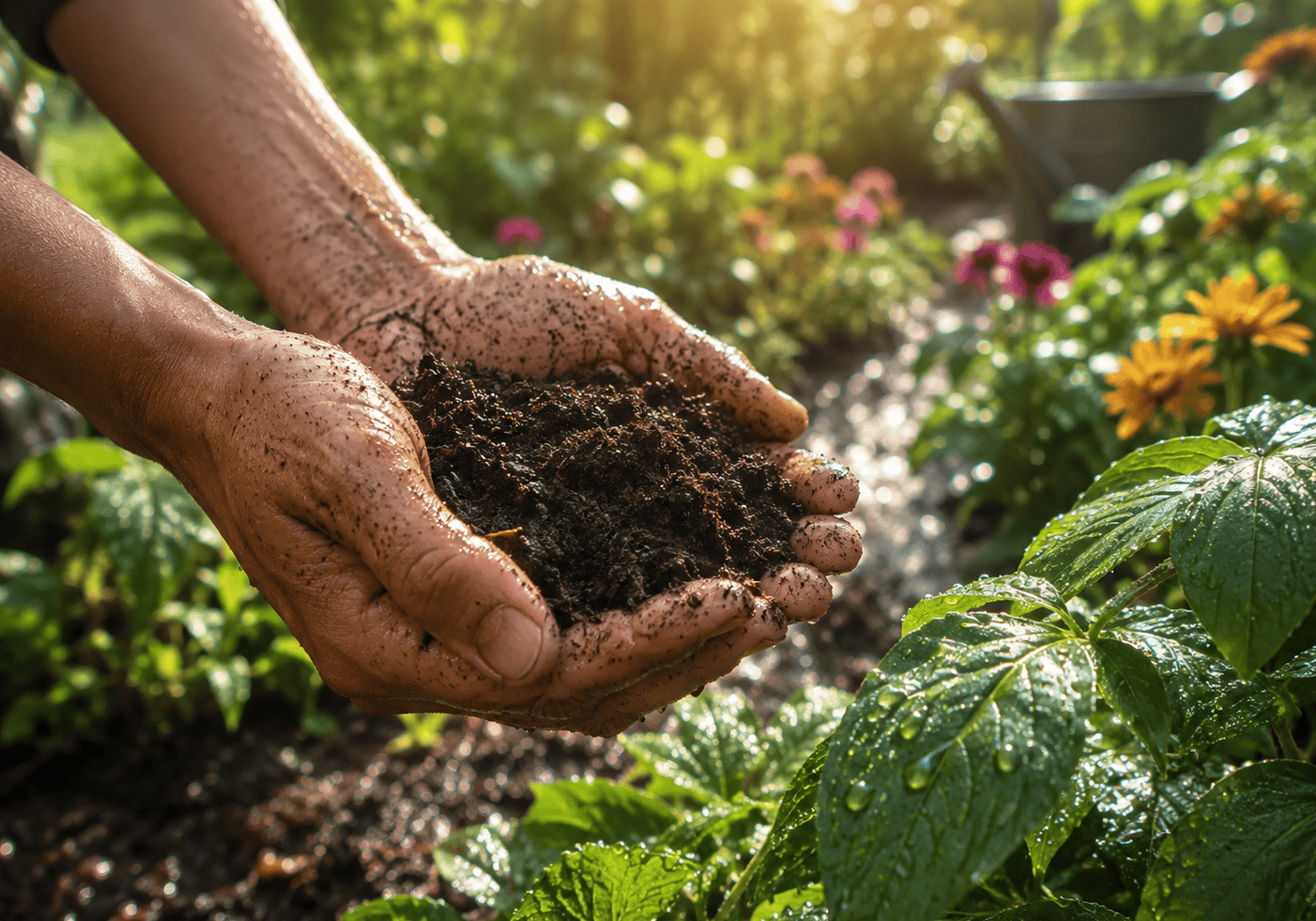
Or maybe it’s peeling an orange and watching its oils catch the light. Or walking barefoot across freshly cut grass. Or holding a handful of warm soil from your own garden.
Ordinary moments. Everyday rituals. Tiny namaskars offered to the senses.
Yet each one has the quiet capacity to remind us that we're here.
So here's my invitation.
Rather than asking, What should I smell?
Ask instead,
What does my Memory Keeper love?
There isn't a right answer. Only your answer.
It may be lavender.
Or it may be that lavender makes you wrinkle your nose.
It may be coffee.
Fresh bread.
Sea air.
Wood smoke.
The pages of an old book.
Or the jumper that still smells like someone you love.
Your soldiers don't need to love what mine do.
They simply need you to start noticing them.
Because perhaps yoga doesn’t have to begin when we're already overwhelmed.
Perhaps it can begin much earlier.
With one quiet breath.
One familiar scent.
And one small act of looking after the soldiers who have quietly stood on the front line of your life all along.
“All around you, in every moment, the world is offering a feast for your senses.” The Radiance Sutras - Lorin Roche

Jacqueline Quayle
Yoga educator, author and teacher trainer exploring mythology, philosophy and language to help teachers create meaningful classes.