Demystifying Yoga
Yoga is for every body (even if you don’t think it is). By Donna Noble
I’ve been saying for years that yoga is for everybody — and every body — and I still find myself saying it again. Not because it sounds good, but because, unfortunately, it is still needed.
I believe there are still too many people who feel that yoga is not for them and are put off even hearing the word. Sometimes they say it outright, and sometimes you can feel it before they even speak. It shows up in their hesitation, in the way they look around the room, in the way they place themselves slightly out of the way, as if they are not quite sure they are meant to be there.
They might say they are not flexible enough, or not strong enough, or that they need to lose weight first. Often, what they are really saying is: “I don’t think I belong here.”
I know that feeling. I know what it is like to walk into a space and not see yourself reflected back. To question whether you are in the right place, or whether your body somehow doesn’t fit. That is why this still matters, because yoga was never meant to feel like something you have to earn your way into.
Somewhere along the way, yoga started to look like it only belongs to a certain type of person. A certain body. A certain level of ability. And when that image is repeated often enough, it quietly shapes what people believe yoga is. That is why representation matters so much.
But that is not the yoga I know. The yoga I know isn’t about achieving the perfect shape of a pose or holding something for the longest time. It is not about how it looks from the outside. It is about the relationship you have with yourself while you are in it.
It’s also about how you take what you’ve learned into your everyday life. For me, that’s where the real yoga has always been.
It is about listening to your body rather than pushing it. It is about noticing your breath rather than forgetting it. It is about being present with yourself, as you are.
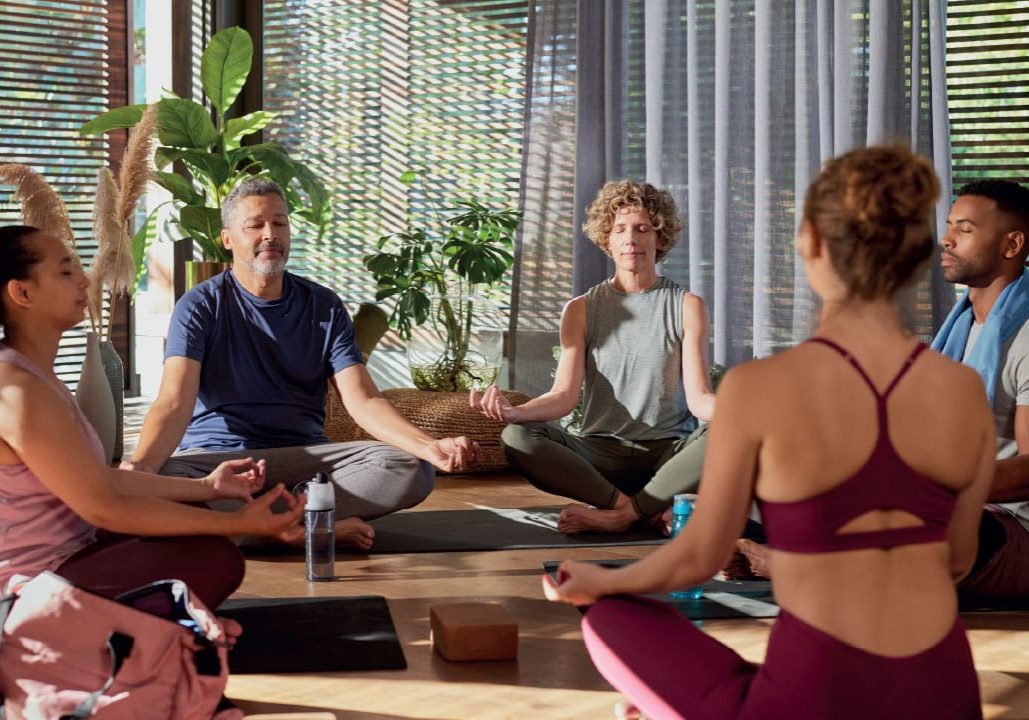
I see this most clearly in spaces where yoga is offered without expectation. In GP referral and social prescribing classes, people come exactly as they are. There is no pressure to perform, no expectation to look a certain way. People arrive with different needs, different bodies and different life experiences, and the practice meets them there.
In class, you’ll see people at the wall, on a chair, or on a mat, all doing their own thing in the same space, experiencing yoga in their own way. No hierarchy.
What’s powerful isn’t just what happens in the session, but what people take away from it. The awareness, the breathing, the ability to pause, to notice and to respond differently.
“For me, yoga has never been about reaching your toes. It has always been about reaching something deeper than that.”
I was reminded of this recently in a conversation with Gail Parker, who asks her students, when they are in tree pose, to notice what the standing leg is doing, because it’s not passive.
I tried this in my own teaching, and the responses were so telling: “I didn’t realise how much I was gripping my toes.” “I can feel my foot working harder than I thought.” “I’ve never paid attention to that before.” “I forgot the breath.”
It shifted the focus completely. When they tried it again, relaxing and changing the breath, the pose became easier. I then asked them how they could use this in their everyday life.
For me, yoga has never been about reaching your toes. It has always been about reaching something deeper than that. There have been times in my life where the practice has been strong and physical, and other times where it has been quiet and barely visible from the outside.
Sometimes simply sitting and breathing is enough. That is still yoga. And when we start to look at it this way, we begin to see that people are already practicing yoga in their everyday lives, whether they realise it or not. When you bend forward to tie your shoelaces, there is your forward fold. When you place your hand on your heart and take a breath, there is your connection. When you pause, even briefly, in the middle of a busy day, there is your practice.
The body has always known how to move, how to breathe, and how to support itself. Yoga gives us a way to notice. So when I say yoga is for every body, I mean it. Every age. Every size. Every ethnicity. Every gender. Every ability. Every story. Not because inclusion is something new, but because exclusion was never the point. Yoga is not asking you to become someone else. It’s asking you to recognise what has always been there.
This is something I explore more deeply in my upcoming book Demystifying Yoga, where I look at how we’ve come to misunderstand the practice, and how we can return to something more honest and accessible.
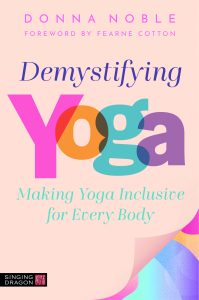
Demystifying Yoga: Making Yoga Inclusive for Every Body — the new book by Donna Noble. Out this summer. Available online and in book stores. £18.99

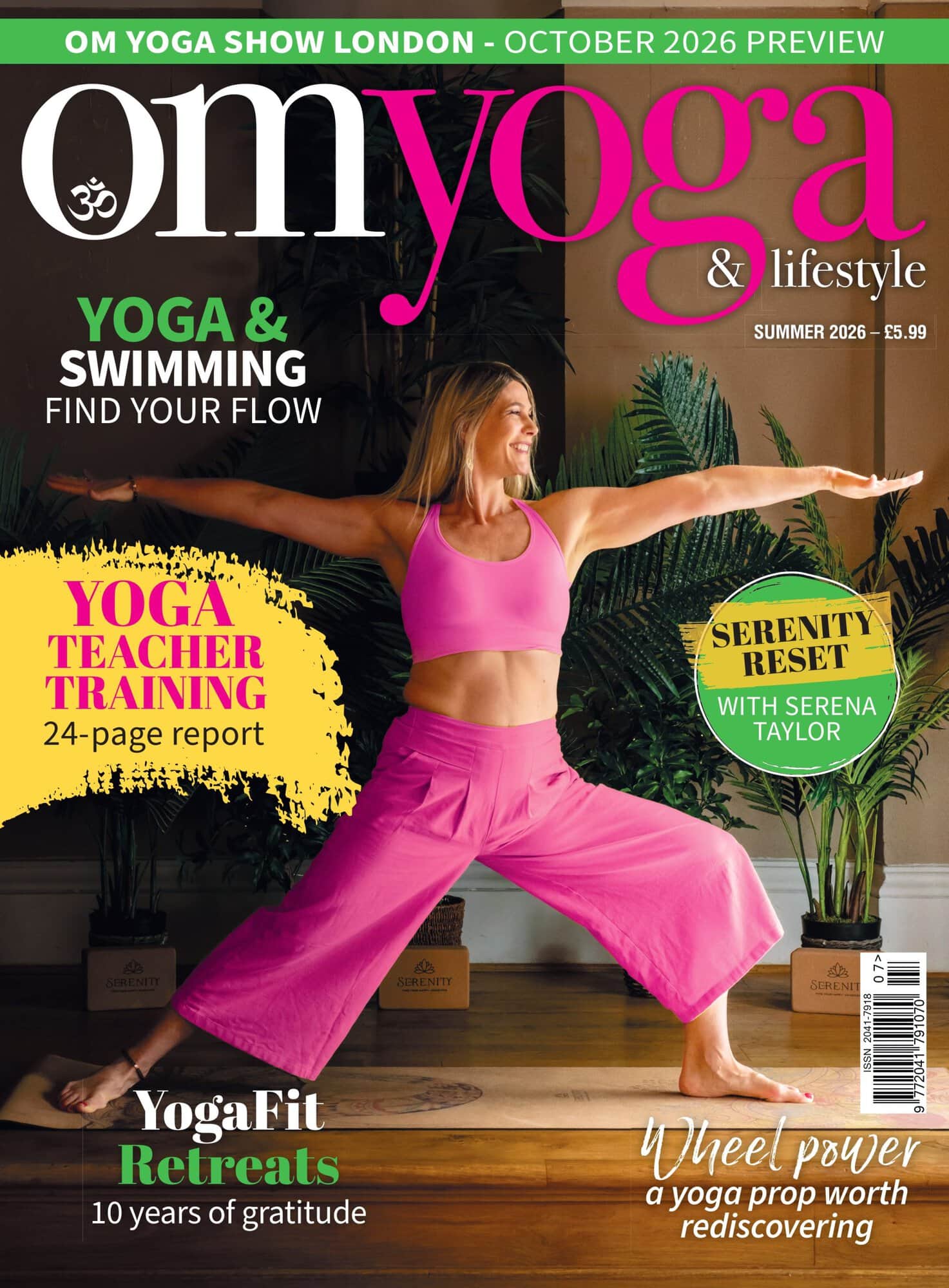
Om Magazine
First published in November 2009, OM Yoga magazine has become the most popular yoga title in the UK. Available from all major supermarkets, independents and newsstands across the UK. Also available on all digital platforms.