
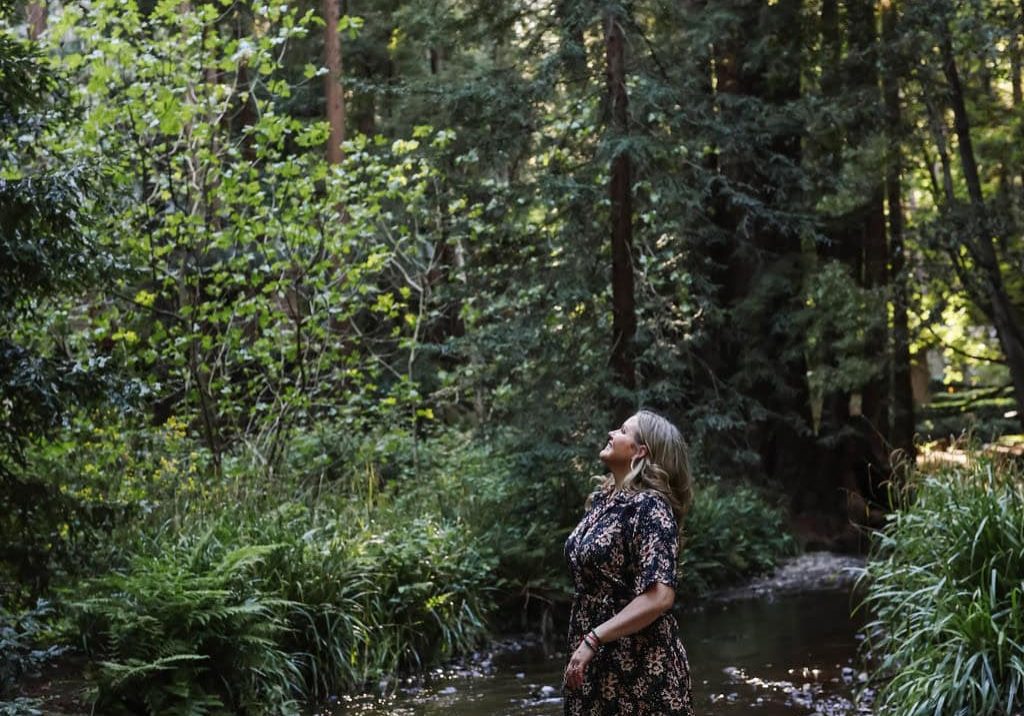
Photo Credit: Natasha Renée & Emily McCafferty Photography
Learning to Read the Moment in Practice
Awareness, timing, and learning to meet practice as it is.
Reading time: 3 minutes
In yoga, we often speak about awareness.
Not just awareness of alignment or breath,
but awareness of when to move,
when to soften, and when to stay.
Over time, practice begins to reveal something subtle.
Not every moment asks for the same effort.
There are days when the body opens easily.
And others when it asks for restraint.
Moments that invite strength.
And moments that require patience.
I cannot count the number of times I have walked onto my mat expecting a strong, focused practice, only to find myself arriving instead in Child’s Pose—tired, emotional, overwhelmed, or simply needing stillness more than movement.
Years ago, I might have judged that as failure.
Now I understand it differently.
Sometimes the practice is not asking us to push.
Sometimes it is asking us to listen.
At first, this can feel frustrating.
We want consistency.
We want progress to look a certain way.
But practice rarely moves in straight lines.
It moves in rhythms.
Learning to sense those rhythms is part of the deeper work.
This doesn’t only apply on the mat.
In life, we move through similar phases.
Times that feel expansive.
Times that feel uncertain.
Times that ask us to act,
and others that ask us to wait.
The challenge is that we often meet every moment in the same way.
Pushing when we’re tired.
Holding back when we’re ready.
Moving out of habit rather than awareness.
Over time, practice can begin to change that.
We start to feel the difference between forcing and responding.
Between effort and alignment.
There are many ways people learn to notice these shifts.
Through the body.
Through breath.
Through observation.
Through paying attention to what life repeatedly reveals.
Over time, I’ve come to feel that what matters most is not becoming attached to any one system, but the awareness the practice invites.
Because when we begin to sense the tone of a moment, our practice changes.
We move with more clarity.
We rest without guilt.
We stay when it matters.
This is where yoga extends beyond the shape.
It becomes a way of relating to experience as it unfolds.
Not every moment is meant to be pushed through.
Not every moment is meant to be fixed.
Some moments are simply asking to be met.
And when we can meet them—with awareness, with steadiness, with presence—something begins to shift.
Not through force.
But through relationship.
Practice: Learning to Read the Moment
These postures offer a way to explore timing and awareness through the body. Move slowly, and allow each shape to become a place of listening rather than effort.
Child’s Pose (Balasana)
A place to arrive
Begin here.
Let the body soften toward the ground.
Allow the breath to settle without control.
There is nothing to achieve in this moment.
Affirmation:
I allow myself to meet this moment as it is.
Legs Up the Wall (Viparita Karani)
Receiving support
Bring the legs up the wall and allow the body to be held.
Let effort drain out of the system.
Notice how it feels to be supported rather than active.
Affirmation:
I do not have to force what is already unfolding.
Thread the Needle (Supine Figure Four)
Listening beneath the surface
Cross one ankle over the opposite thigh and gently draw the legs in.
Move slowly enough to feel what is actually there.
Affirmation:
I trust myself enough to listen honestly.
Wide-Legged Position at the Wall
Allowing space
Extend the legs up the wall and gently open them out to the sides.
Let gravity do the work.
Let the body open without force.
Affirmation:
Space allows me to soften into what is true.
Legs Up the Wall (Viparita Karani)
Returning to stillness
Come back to the wall once more.
Notice what has changed—not by forcing anything,
but simply by staying.
Allow the breath to settle naturally.
Let the nervous system soften into support.
Affirmation:
I do not need to rush what is becoming.
Closing
There is no “right” way to move through these postures.
The practice is not in the shape itself,
but in your relationship to it.
Over time, this awareness begins to extend beyond the mat—into the moments where life itself becomes the practice.

Mellara Gold
Mellara Gold is an embodied practice teacher and writer rooted in yoga, mindfulness, and contemplative traditions.