Photo Credit: Emily McCafferty Photography
Still Practicing: When the Real Work Begins (3 Poses to Return to Yourself)
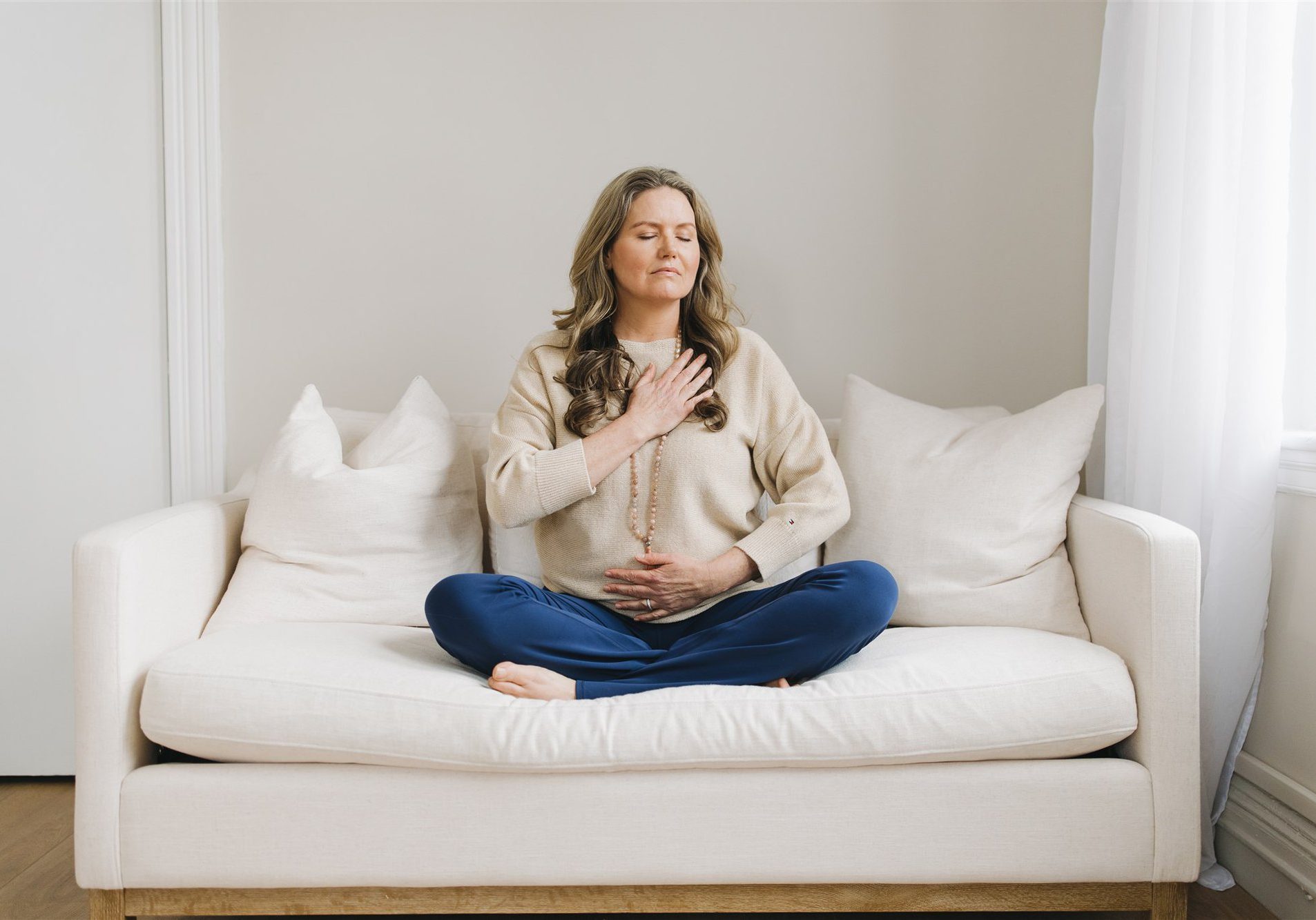
There are moments in practice when nothing needs to be added, and nothing needs to be fixed. Just this— a hand to the heart, a hand to the body, and the quiet remembering that we are already here. Not striving. Not performing. Just listening. Because sometimes the most powerful practice is simply learning how to stay.
Reading time: 3 minutes
There was a time when I believed practice would eventually make life feel steadier.
More predictable. More contained.
If I breathed enough, moved enough, studied enough, perhaps things would settle into something manageable.
But life rarely arranges itself that way.
Over time, practice stopped being something I did in a designated space and became something I relied on in ordinary, unpolished moments. It appeared when my child was struggling and there was nothing to fix. When hormonal shifts left me feeling exposed and unfamiliar in my own body. When I showed up to teach feeling tender, aware that presence mattered more than composure.
Practice did not remove uncertainty.
It taught me how to stay.
I notice the way my jaw tightens before my thoughts catch up. The way my breath shortens when I feel I should be handling something better. Practice now begins there — not in perfection, but in awareness.
Yoga was never meant to create stability by eliminating change. The teachings remind us that fluctuation is part of being human.
Bodies shift.
Roles evolve.
Emotions arrive uninvited.
We can be physically home and still feel far from ourselves.
Embodied practice, as I understand it now, is not about control or self-improvement. It is about relationship — staying connected to breath, sensation, and awareness as life unfolds.
Healing, in this sense, is not about fixing what is broken. It is about remembering that wholeness was never lost.
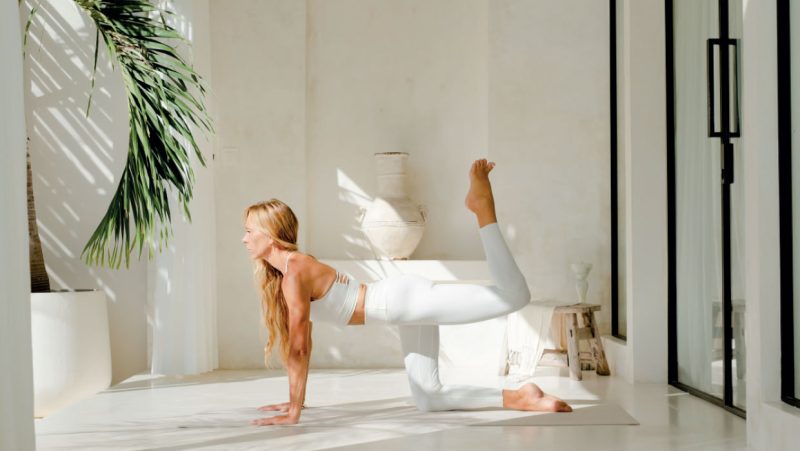
When things feel unsteady, I return to simple shapes — not to stretch or achieve, but to listen.
Balasana (Child’s Pose)
Knees grounded, forehead resting, arms soft. The body folds inward and down.
There is nothing to perform here. Gentle flexion can quiet the nervous system and offer a sense of safety.
What happens when I allow myself to be held, rather than holding everything together?
Viparita Karani (Legs Up the Wall)
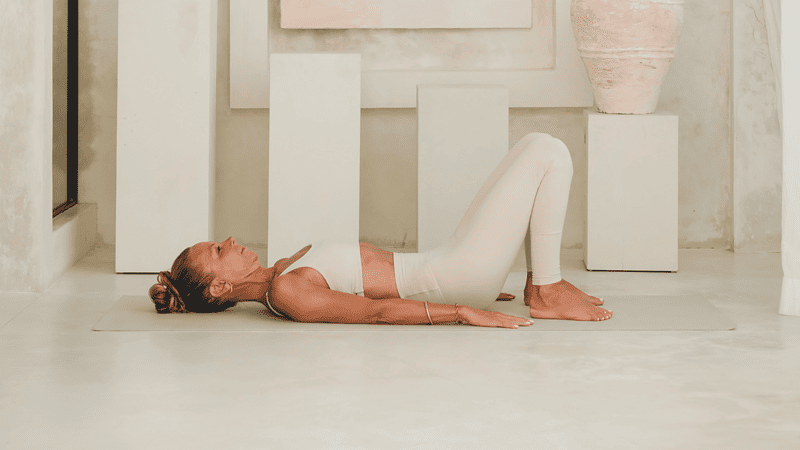
Lowering onto the back with the legs supported by the wall, the spine softens into the earth.
This gentle inversion steadies the breath and subtly shifts perspective.
What if nothing needs to be solved in this moment?
Supta Baddha Konasana at the Wall
Lying near the wall, hips close but not touching, the soles of the feet come together. The knees soften open slightly away from the wall. Palms rest open to the sides.
The wall offers quiet containment. The posture invites receptivity without strain. Supported underneath, nothing needs to be held in place.
What would it feel like to receive support without earning it?
These are not dramatic practices. They are returns.
Over time, practice becomes less about becoming someone and more about remembering how to be with what is. Showing up imperfectly. Staying present when certainty dissolves.
We are still practicing — not toward an end point, but within the ongoing rhythm of living.
The real work does not begin when life becomes calm.
It begins when we learn to remain in relationship with ourselves as it changes.
We are not practicing for a calmer life.
We are practicing for a conscious one.

Mellara Gold
Mellara Gold is an embodied practice teacher and writer rooted in yoga, mindfulness, and contemplative traditions.