

The Unveiling of Awareness
Discover how Advaita Vedanta can help you realize that enlightenment is simply the realization of a truth that has always existed but has been obscured by avidya (spiritual ignorance).
Reading time: 3 minutes
The Unveiling of Awareness: Vedanta Decodes the Illusion of Ignorance
In the realm of Advaita Vedanta—a profound Hindu philosophy centered on nondualism, or the essential oneness of all existence—human awareness is not a destination we reach after a long haul.
It is a journey of unveiling what is already there rather than acquiring something new.
We are currently trapped in an illusion far greater and more convincing than any stage magic performed by David Blaine or David Copperfield.
Enlightenment is simply the realization of a truth that has always existed but remained obscured by Avidya (spiritual ignorance).
To wake up, we must move through the four layers of this illusion.
Layer 1: Not Knowing: The State of Avidya
At first, most of us believe we are solely defined by our physical bodies, our fluctuating feelings, and the constant chatter of the voice in our heads. We live under the assumption that “this is me” and everything else is “out there.”
In Advaita Vedanta, this confusion is called Avidya. This isn’t about being unintelligent; it is a spiritual forgetting wherein we confuse our true nature with our temporary experiences.
This misunderstanding is powered by maya, a Sanskrit word meaning “measurer.”
Maya is the cosmic trick that makes the changing, temporary stuff of the world feel like the ultimate reality. It is the lived texture of our attachments—our identification with our story, status, and fears.
Layer 2: Getting Tired of the Search (Seeking)
Life has a way of teaching us that even when we get exactly what we want, the peace doesn’t last.
You can win, accumulate likes, or gain popularity yet still feel a persistent restlessness inside. In spiritual circles, we often talk about this as a search for meaning.
Advaita Vedanta suggests that this very frustration is a catalyst for the soul. It forces you to ask, “Is there more to me than my problems and my personality?”
This stage is the beginning of renunciation—not of the world but of the delusion that external objects can provide permanent happiness.
Layer 3: Looking Closely: The Path of Inquiry
Advaita invites us to start noticing the patterns of our lives. Your thoughts change. Your moods change. Your body changes.
However, there is a witness—the one who notices all of it. This awareness is like a movie screen that remains unchanged regardless of whether the movie being projected is a comedy or a tragedy.
Through consistent practice, you learn to stop saying “I am my thoughts” and begin to realize “I am the unchanging awareness in which these thoughts arise.”
Layer 4: Waking Up: Recognition of the Self
Enlightenment isn’t about becoming a new person; it is realizing that the real you is awareness itself, not the changing story. In this tradition, we discover that this individual awareness (Atman) is not separate from the deepest universal reality (Brahman).
This is the essence of the great saying “Tat Tvam Asi,” which translates to “that thou art”—the realization that your soul is identical to universal consciousness. Life continues to happen, but you experience a steady internal freedom, less fear, and a profound lasting peace.
The Ultimate Shift in Perception
Ultimately, one realizes there was never a journey or a seeker to begin with. There was only the ever-present nondual awareness that finally stopped identifying with the illusion.
The shift is a change in how you perceive reality. Before, you might have felt like a limited, struggling person in a scary world.
After, you realize “I am the unchanging awareness in which this entire world appearance takes place.” It is like the classic optical illusion: First you see the old lady, and then suddenly you see the young lady.
It Is the Illusion of Separation That Causes Us to Seek Liberation
The process only ends when we realize that the seeker, the seeking, and the goal are—and always have been—one.
As the ancient texts suggest, we must simply “be still and know” the truth of what we already are.
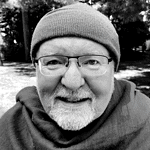
Thomas Clifford
Thomas Clifford (Paramananda) is a retired documentary filmmaker and copywriter. He is a Kriya Yogi in Paramahansa Yogananda’s lineage and a lay monk in Bede Griffith's Saccidananda Ashram's lineage.