Strong Bodies, Steady Minds: Why a Varsity Basketball Team Chose Yoga
My son Charlie is a sophomore on the varsity basketball team. And before I knew it, the entire varsity squad was walking into the studio — not because they were told to, but because they wanted to.
Reading time: 5 minutes
It wasn’t organised by the coach.
It wasn’t mandatory.
It wasn’t part of their training plan.
My son Charlie is a sophomore on the varsity basketball team. Sixteen years old. It was February break — though for athletes, that hardly feels like a break. They were in the middle of boot camp week: conditioning, drills, intensity.
Somewhere in the midst of that, the boys decided they needed yoga.
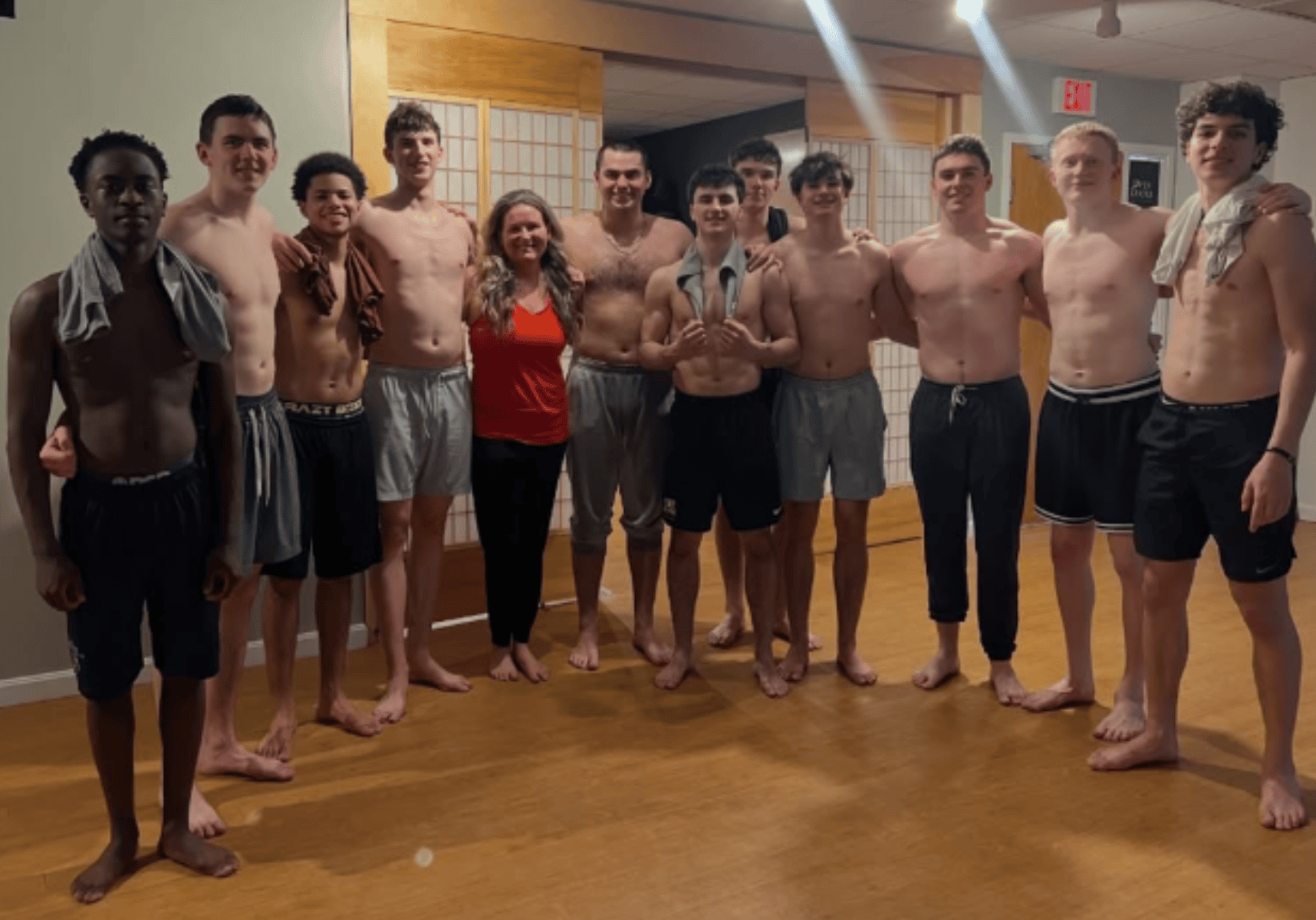
Charlie mentioned it. The team agreed. And before I knew it, the entire varsity squad was walking into the studio — not because they were told to, but because they wanted to.
That matters.
A Chosen Pause
As they settled in, I told them they were welcome to bring any valuables inside. One boy was running late — he had accidentally gone to the wrong Open Doors Yoga studio. There are several. The room laughed.
That’s when one of them said, “I left my phone outside. My doom scrolling will be better later if I do.”
Everyone laughed again.
But the phones stayed outside.
Before we began, a few of them asked respectfully if they could remove their shirts if the room became too warm. It was a simple question — but it revealed awareness. They weren’t assuming. They were considering the space.
This wasn’t chaos.
It was chosen presence.
Yoga Was Once for Young Men
In many Western spaces, yoga is still framed as soft or secondary to “real” athletic training. But historically, physical yoga practice in India was largely taught to young boys and men. It was disciplined. Repetitive. Heat-building. Structured. What we now recognise as flow-based yoga evolved from those traditions.
Yoga trained focus.
It trained stamina.
It trained the nervous system.
Long before it became a boutique class, it was a system for cultivating clarity within strong bodies.
In many ways, it was cross-training.
What Basketball Demands
Basketball is explosive.
Cutting, pivoting, sprinting, rebounding — over and over again. Hips are heavily recruited. Adductors tighten. Hip flexors shorten. Ankles absorb impact. The spine rotates and stabilises at speed.
Layer in academic pressure, social expectation, and constant digital stimulation, and young nervous systems rarely shift out of “on.” The sympathetic state — push, perform, compete — becomes the baseline.
So I built the class around what would serve them most.
Slow flow.
Grounded standing postures.
Inner groin and hip mobility.
Breath-led transitions.
Space between efforts.
Medicine in Movement
I was seventeen when I was diagnosed with five bulging discs — roughly the same age as the boys in front of me.
At that stage of life, identity is often built around strength and performance. Being told my spine was compromised was humbling. Yoga became the medicine that helped me understand how relief could come not from pushing harder, but from moving more intelligently.
That experience reshaped how I teach.
Practice became therapeutic. Functional. Sustainable.
Medicine in movement.
Not yoga for performance — but yoga for integrity.
The Shift in the Room
One of their favourite postures surprised none of us: supported bridge with a block beneath the sacrum. Simple. Passive. Supported.
Bodies that are constantly asked to perform often crave being held.
The room exhaled.
Supported bridge gently opens the front body and decompresses the lower spine, but its deeper gift is neurological. It invites the parasympathetic nervous system — the “rest and restore” state — to come online.
For bodies trained to drive forward, being held can be profound.
The quiet during savasana was not imposed. It was chosen.
These young men are competitive athletes. They are trained for performance.
And yet, they welcomed stillness.
Strength and Regulation
This wasn’t rebellion against their coach. They were in the middle of boot camp week and showed up fully to that as well. This was intuitive balance.
Strong bodies need mobility.
Explosive muscles need length.
Competitive minds need quiet.
Slowing down is not softness.
It is strategy.
After class, they lingered. Sweaty. Calm. Clear. They asked when they could return.
Hundreds of years ago, yoga supported young men in cultivating discipline and clarity within strong bodies. In a small studio during February break, I witnessed that thread reappear — not as tradition, but as instinct.
These boys are athletes.
They are competitors.
They are also nervous systems.
And sometimes the most powerful training session isn’t louder.
It’s quieter.
Strong bodies.
Steady breath.
Clearer minds.
Perhaps yoga doesn’t need to be adapted for young men.
Perhaps it simply needs to be remembered.
4 Poses for Basketball Recovery
- Low Lunge with Inner Groin Focus (Anjaneyasana variation)
From a low lunge, gently widen the front foot and guide the knee slightly outward to awaken the adductors. Basketball demands lateral power — this restores balance through the inner thighs. - Wide-Leg Forward Fold (Prasarita Padottanasana)
Lengthens the hamstrings and inner groin while decompressing the spine. Keep a soft bend in the knees and allow the crown of the head to release toward the floor. - Supported Bridge (Setu Bandha Sarvangasana)
Place a block beneath the sacrum, just above the tailbone. Let the pelvis be held. This passive shape decompresses the lumbar spine and encourages parasympathetic regulation. - Supine Twist (Jathara Parivartanasana)
Restores gentle rotation through the spine and releases residual tension from repetitive directional movement on the court.
Hold each posture for 5–10 slow breaths. Let the breath lead the body.

Mellara Gold
Mellara Gold is an embodied practice teacher and writer rooted in yoga, mindfulness, and contemplative traditions.