How to Start a Meditation Practice and Stick With It: A Beginners Guide to Mindful Living
Meditation is not about eliminating thoughts. Instead, conceptualize meditation as attention training, or a mental gymnasium where you strengthen your capacity for focused awareness.
Reading time: 5 minutes
When you consider meditating, what comes to mind?
Perhaps you envision yourself sitting cross-legged beneath a bodhi tree on a misty mountaintop, radiating perfect tranquility.
Or maybe you're thinking, "Quiet my mind? I can't even quiet my group chats," or "Meditation sounds wonderful... right after I finish literally anything else."
The reality is far more accessible: you don't need a mountaintop retreat, a perfectly still mind, or hours of available time to experience meditation's profound benefits. This evidence-based practice isn't about achieving flawless serenity, but is about cultivating present-moment awareness and emotional resilience that can enhance any lifestyle, regardless of how demanding your schedule may be.
Understanding Meditation: Beyond the Myths
Let's address the most pervasive misconception immediately: meditation is not about eliminating thoughts. If you approach practice expecting complete mental silence, you'll likely feel discouraged and abandon the effort prematurely.
Instead, conceptualize meditation as attention training, or a mental gymnasium where you strengthen your capacity for focused awareness. Your mind will inevitably wander; this is not a failure but the very foundation of practice. The skill lies in noticing when attention has drifted and gently redirecting it to your chosen anchor, whether that's the breath, bodily sensations, or environmental sounds.
A Helpful Framework
Consider your mind as a snow globe. Throughout the day, we will get shaken up and be agitated with thoughts, worries, comparisons, and judgments swirling chaotically.
Meditation doesn't eliminate this mental activity, but it provides the stillness necessary for clarity to emerge. Our thoughts will continue to move, but we develop the capacity to observe them with greater equanimity and self-compassion.
While meditation has roots in various contemplative traditions, from Buddhist mindfulness to Hindu raja yoga, the secular, evidence-based approaches we'll explore here have been adapted and validated for contemporary therapeutic and wellness applications.
The Scientific Foundation: Why Meditation Matters
The science behind meditation tells a compelling story of transformation, one that researchers are documenting with increasing clarity. When neuroscientists at Harvard began scanning the brains of meditation practitioners, they discovered something remarkable: in just eight weeks, regular mindfulness practice increased gray matter density in regions governing learning, memory, self-awareness, and emotional regulation. The brain, it seemed, was physically reshaping itself in response to contemplative practice.
This structural change manifests in measurable ways throughout the body and mind. A comprehensive meta-analysis published in JAMA Internal Medicine examined over 3,500 participants and found that mindfulness meditation programs meaningfully reduced anxiety, depression, and pain while enhancing overall psychological well-being. The effects on stress proved particularly striking, with cortisol levels dropping, and participants reporting a decrease in stress-related symptoms.
But perhaps the most intriguing findings involve what researchers call "affective resilience,” which is essentially, how quickly we bounce back from emotional turbulence. Studies show that mindfulness meditation training helps people react less intensely to stressful situations and recover more quickly when faced with upsetting experiences . The practice appears to cultivate an "observer self," a metacognitive awareness that allows us to witness our own thinking patterns and interrupt destructive mental spirals before they gain momentum.
Even the racing mind that sabotages sleep responds to meditation's influence. In a clinical trial of older adults with moderate sleep disturbances, mindfulness meditation produced meaningful improvements in sleep quality compared to sleep hygiene education, with a large effect size that was comparable to standard pharmacological and behavioral treatments for insomnia. The practice appears to reduce automatic arousal responses and activate the body's natural relaxation mechanisms.
How to Start a Mediation Practice
1. Establish Your Practice Space
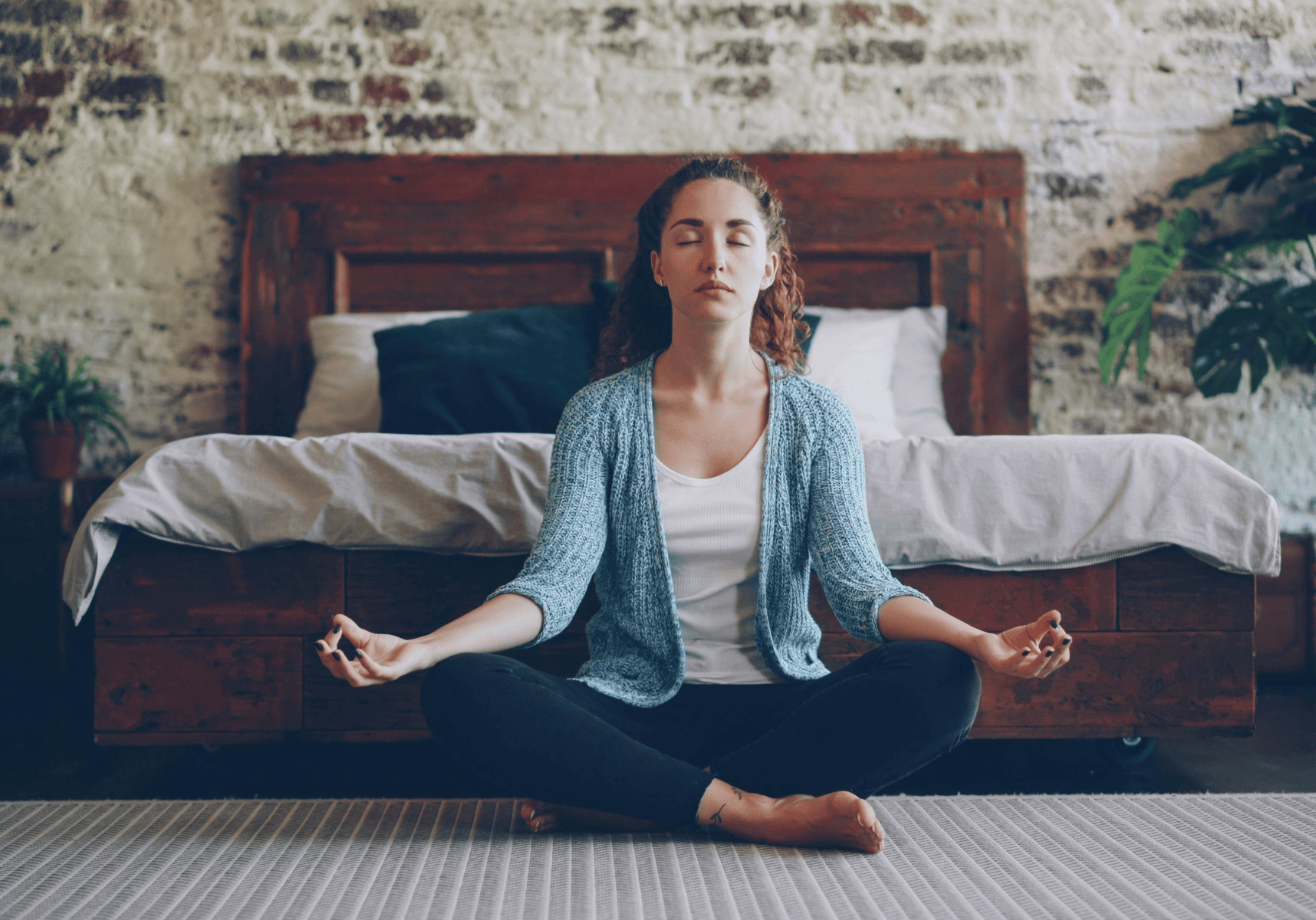
Designate a consistent location where interruptions are minimal. This needn't be elaborate or out of the ordinary. It can be a corner of your bedroom, a comfortable chair, or even a quiet spot in your office. The key is consistency and minimal distractions.
Consider these elements:
- Comfortable seating that supports alertness without strain
- Reduced visual distractions (dim lighting, minimal clutter)
- A simple cue that signals practice time (a candle, cushion, or meaningful object)
2. Start With Micro-Sessions
Research shows that consistency trumps duration in building sustainable habits. A 2019 study found that brief, daily meditation enhances attention, memory, mood, and emotional regulation in non-experienced meditators, demonstrating that regular short practice sessions yield meaningful cognitive and emotional benefits.
This "minimum effective dose" approach reduces resistance and builds momentum, as the benefits of mindfulness grow stronger with consistent daily practice rather than longer but infrequent sessions. Begin with one or two minutes daily rather than attempting lengthy sessions. From here, you can slowly lengthen your sessions.
3. Build Concentration, Then Explore Different Approaches
While meditation encompasses a rich variety of techniques, newcomers often benefit from a clear starting point. Consider beginning with focused attention meditation—sometimes called Samatha or concentration practice—which trains your mind like you might train a muscle at the gym.
The practice is elegantly simple: concentrate on a single object, typically the sensations of your breath, and when your mind inevitably wanders (as minds do), gently guide your attention back to this anchor. This foundational skill of directing and sustaining attention creates a stable base for all other contemplative practices.
Once you've developed some steadiness through focused attention work, a world of approaches opens before you. Open monitoring meditation, known as Vipassana in Buddhist traditions, invites you to observe whatever arises in awareness, without getting caught up in the content or passing judgment. Body-based practices like progressive muscle relaxation or body scanning can prove particularly effective if you carry physical tension or have experienced trauma. For those who find stillness challenging, movement meditation through walking practice, gentle yoga, or tai chi integrates mindfulness with physical activity.
And loving-kindness meditation, called Metta practice, cultivates positive emotions toward yourself and others through specific phrases and visualizations, opening the heart alongside training the mind.
4. Habit Stacking for Sustainability
Attach meditation to existing routines to reduce the cognitive load of remembering. Effective pairings include:
- After morning hygiene routines
- Before your first cup of coffee
- During lunch breaks
- As part of your bedtime ritual
This "habit stacking" leverages established neural pathways, making the new behavior feel natural rather than burdensome.
5. Embrace Imperfection
Meditation is called "practice" for good reason. Your mind will inevitably wander. Each moment of noticing distraction and returning to your anchor strengthens attention. Rather than judging a "restless" session as unsuccessful, recognize it as valuable training.
Some days will feel effortless; others will seem chaotic. Both experiences are normal and beneficial. Remember that there’s no such thing as a bad meditation session. Every moment of observing and redirecting the wandering mind is an opportunity to practice compassion and strengthen your awareness.
Maintaining Momentum
Track Your Progress
Use a simple journal or habit-tracking app to mark each session. Visible progress can be surprisingly motivating, and streaks create positive momentum. Guided instruction through apps like Insight Timer, Calm, or Ten Percent Happier provides structured support, particularly helpful when you're finding your footing.
Find Community
Consider joining local meditation groups, online communities, or working with a qualified instructor. Social support and guidance can increase commitment and accountability to contemplative practices.
Vary Your Approach
Rotate between different techniques to maintain interest. Or incorporate elements that make meditation more appealing. Try nature-based meditations outdoors, experiment with different guided teachers, or explore sound-based practices or meditations with music.
Address Obstacles Proactively
Physical Discomfort: It is okay to be comfortable as you learn to meditate. Experiment with different postures, such as sitting in chairs, using cushions, or even lying down (though this may increase drowsiness).
Restless Mind: Remember that noticing mental activity is awareness itself. You're not trying to stop thoughts, but to alter how you respond to them and relate with them.
Feeling "Nothing is Happening": Benefits often emerge subtly and are nuanced. Track mood, sleep quality, or stress levels over weeks rather than expecting immediate dramatic changes.
Time Constraints: Even 30 seconds of mindful breathing can interrupt stress responses. Perfect conditions aren't necessary to practice. Focus on progress, not perfection.
When to Seek Additional Support
While meditation is generally safe and beneficial, certain individuals may need additional considerations:
- Those with severe depression or anxiety may benefit from combining meditation with professional therapy.
- Individuals with trauma histories might find body-based practices initially challenging and could benefit from trauma-informed instruction.
- People experiencing psychotic symptoms should consult mental health professionals before beginning deep practice.
Meditation can be a complement, not a replacement, to professional mental health treatment.
Your Next Steps: A Practical Checklist
Ready to begin? Here's your implementation guide:
- Choose your space: Identify a quiet, consistent location
- Set a micro-goal: Commit to 1-2 minutes daily for one week
- Select your technique: Start with mindful breathing
- Pick your timing: Link practice to an existing habit
- Track your sessions: Use a simple journal or app
- Plan for obstacles: Decide how you'll handle restless days
- Schedule your first session: Put it in your calendar now
The Ripple Effect
Meditation's benefits extend far beyond the cushion. As you develop greater awareness and emotional regulation, you may notice improvements in relationships, work performance, and overall life satisfaction. The practice doesn't promise to eliminate life's challenges, but it can fundamentally change how you relate to them.
Research consistently shows that even brief, consistent practice creates measurable changes in brain structure and function within weeks. You're not just sitting quietly and relaxing, you’re literally rewiring your brain for greater resilience, focus, and well-being.
The journey of a thousand miles begins with a single step. In meditation, that step is as simple as one conscious breath.
Go ahead, take that breath now.

Joseph Wilner
Joseph Wilner, LCP, ADHD-CCSP, BCC, helps adults with ADHD and professionals manage stress, executive functioning, and life balance.