Exchange of Energy in a Yoga Class
A posture is not spiritual because of its shape. Breath is not sacred because it is invisible. These things become spiritual when they are met with attention, presence, and relationship. Consciousness touching form - that is where the alchemy happens.
Reading time: 4 minutes
In yoga, we often speak about transcending the material world. The body is a vehicle. Sensation is a teacher. The physical is something to move through on the way to the subtle. Yet the longer I practice and teach, the more I experience something quieter and more radical: the spiritual does not live somewhere else. It reveals itself through matter.
A posture is not spiritual because of its shape. Breath is not sacred because it is invisible. These things become spiritual when they are met with attention, presence, and relationship. Consciousness touching form - that is where the alchemy happens.
This understanding has deeply shaped how I experience teaching yoga.
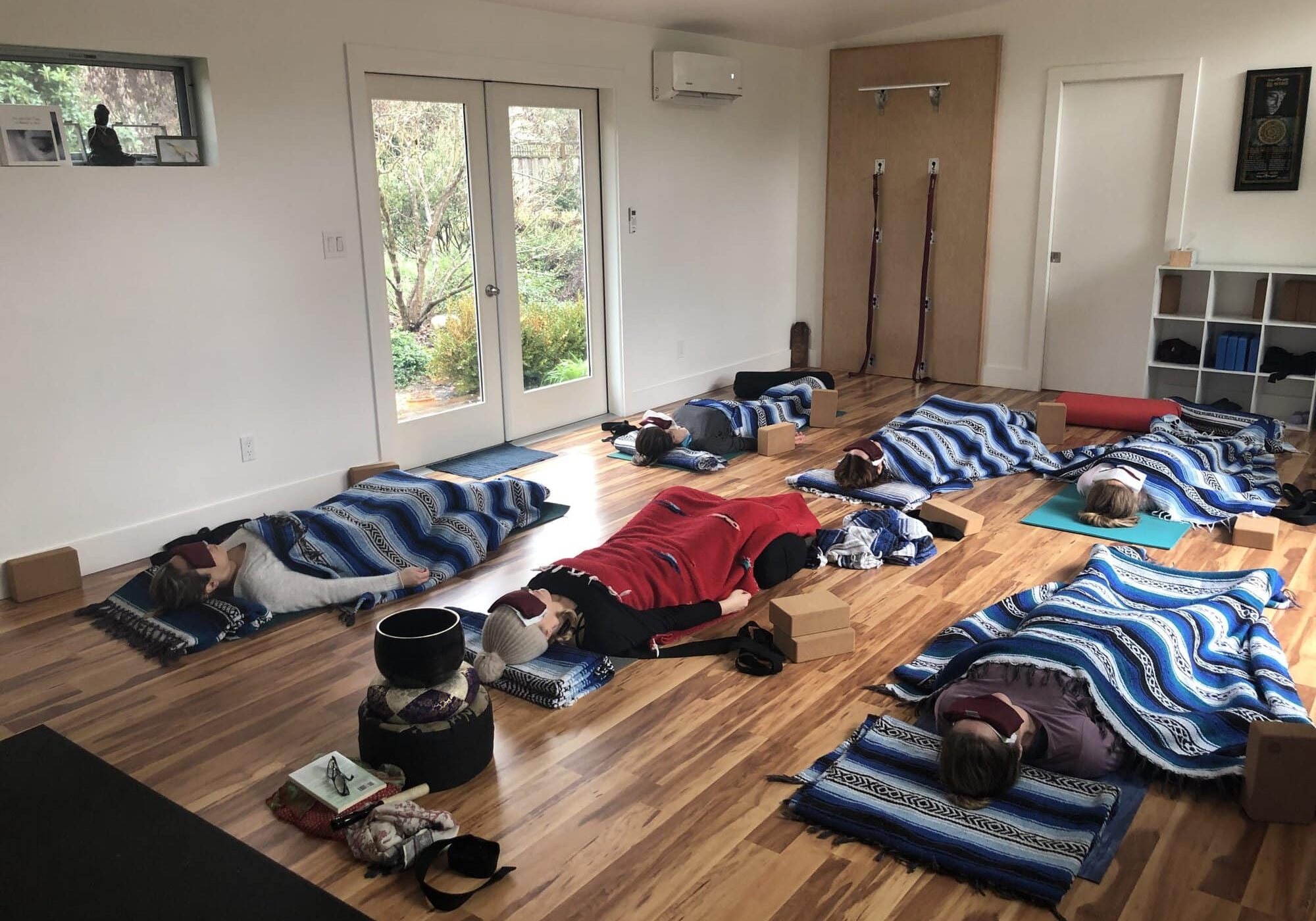
When I walk into a class, I am not offering something one-directionally. Teaching is not a performance, and it is not simply a service rendered. It is an exchange of energy, awareness, and intention. The room itself becomes a living system. Breath circulates. Attention circulates. Something larger than any one person begins to form.
Over time, I have learned - sometimes gently, sometimes through disappointment - that there needs to be enough life in the room for this exchange to stabilise. For me, that threshold is often around three to six people. Below that, something feels incomplete. Not wrong, not a failure - but unfinished, like a circuit that cannot quite close.
This is not about numbers for their own sake. It is about balance.
Energetically, a yoga space asks for a meeting of qualities we might call masculine and feminine - not as genders, but as forces. Structure and receptivity. Direction and yielding. Offering and receiving. While it can be lovely to have diverse bodies and expressions in the room, this balance does not depend on who is present or how they identify. These qualities live within each individual. A class becomes whole when there is enough collective presence for these energies to move, respond, and harmonise.
When a group is too small, the flow can become overly concentrated. The teacher may be holding structure, direction, and containment, but the receptive field has not quite formed to meet it. Energy gives, but does not fully circulate back. Anyone who has taught knows this feeling - not as an idea, but in the body.
There are also times when this is simply part of the process - when we are new to a space, or still building something. In those moments, presence matters even more. Not only from the teacher, but from the students willing to show up for the sake of practice itself. Practice is not only about a particular teacher, even though connection there can be meaningful. It is also about the willingness to meet what is unfamiliar - to step into a room, a voice, or an experience that is not yet known. In that sense, showing up can become its own form of practice - one that asks for openness, patience, and a quiet trust in change.
Rather than seeing any of this as a personal shortcoming, I’ve come to understand it as information. Spirit speaks through form. Through attendance. Through timing. Through what gathers and what does not. Sometimes the message is simple: this container is not needed right now. Sometimes it asks for a shift in rhythm or intention. Sometimes it invites rest instead of effort.
A yoga class, like any sacred ritual, requires participation to come alive. One person can practice. Two can witness. But a small group creates a field - a shared attentiveness that no individual can generate alone. That field is not owned by the teacher, nor produced by the students. It arises between.
The spiritual does not ask us to bypass the material.
It asks us to listen to it more closely - and to trust what it tells us.

Mellara Gold
Mellara Gold is an embodied practice teacher and writer rooted in yoga, mindfulness, and contemplative traditions.