
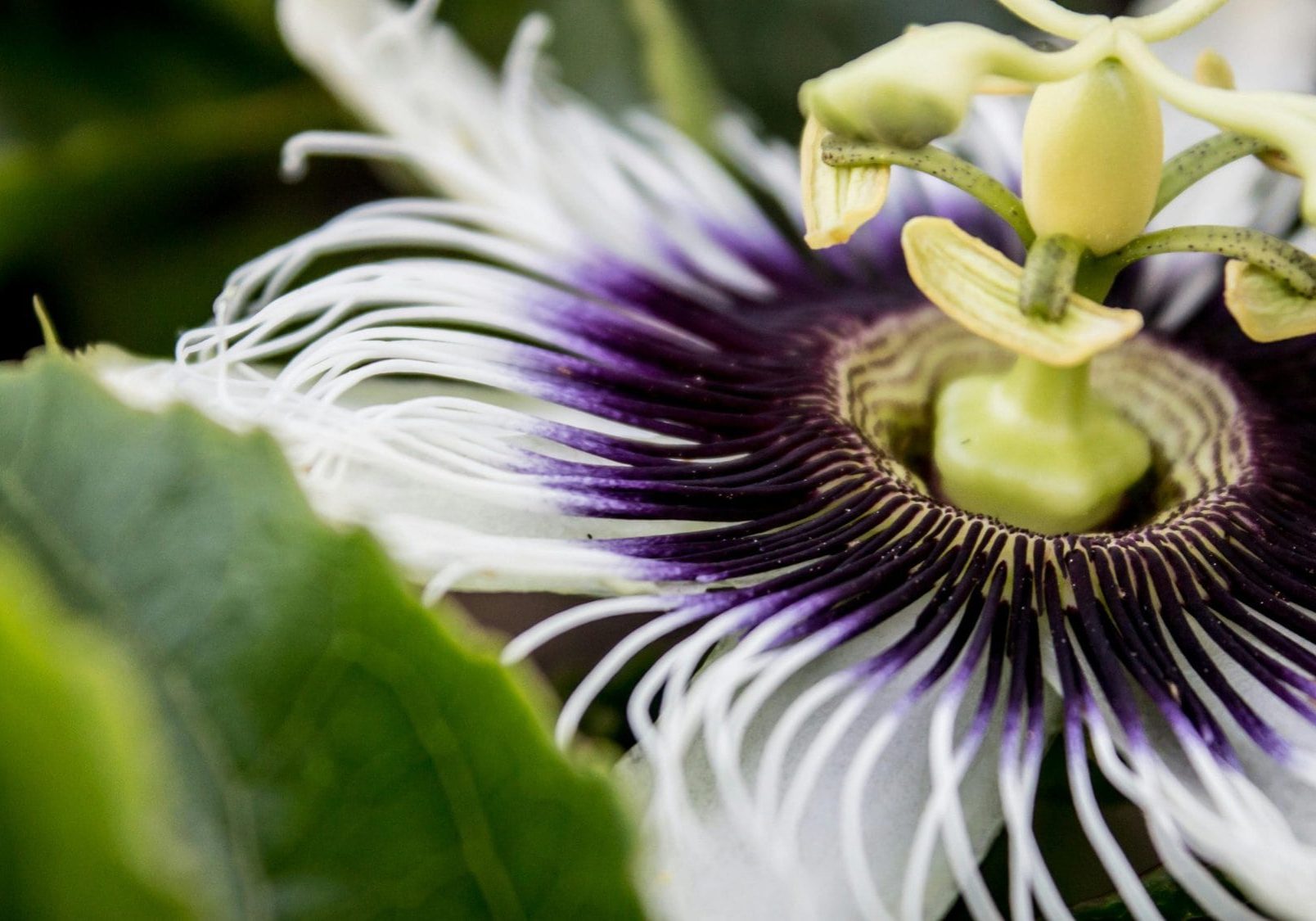
A Herbalist's Route to Calm, Passion Flower
Passiflora’s full name in Latin is Passiflora incarnata. In English, it is commonly called Passionflower, but it has some other gorgeous names including ‘maypops’, ‘wild passion vine’, or ‘wild apricot’.
Reading time: 3 minutes
The flowers and vines are used in herbal medicine and the fruit is edible, and whilst native to South America, it now grows in many gardens around the UK and Ireland, thanks to its stunning and intricate flowers which are loved by many.
As for its herbal uses, Native Americans clocked on long before Western Herbalists that it can make for a gentle, yet effective sedative and anxiolytic plant, but there are plenty of reasons why you may wish to try Passiflora.
Modern herbal uses
Anxiety
Passiflora is a wonderful remedy for calming the nervous system and reducing symptoms of anxiety, with published research showing it can be as effective as Oxazepam, a benzodiazepine used to treat anxiety. It is also important to note that Passiflora does not have the same addictive nature, or any of the side effects, associated with benzodiazepines.
Passiflora also helps to improve concentration and ease exam nerves, so definitely great to take while studying and doing exams, or before interviews or a big work presentation.
Stress
Passiflora is also a great herb for stress, helping to reduce the internal stress we take on board by overthinking and worrying about our stressors. It is often what is needed for those people who keep going until they burn out. Passiflora helps them rest and relax and let go of the stress, rather than pushing through!
Sleep
Given how it can help with stress and anxiety, it’s perhaps hardly surprising that many herbalists use Passiflora to aid sleep, and it can be particularly helpful for people who take a long time to get asleep. That said, it should be noted that it is best used throughout the day, not just at night, and it does not cause drowsiness.
Pain
Passiflora’s anodyne effect can make it useful for treating pain: headaches, nerve pain, backaches and period pain, although you would usually pair with other herbs for pain, e.g., with Hypericum for nerve pain; with Valerian for period pain; and with Devil’s Claw for backache or joint pain.
Addiction withdrawal
Many herbalists also find Passiflora to be really helpful to support people who are coming off addictive substances, to assist in minimising the withdrawal symptoms. This could be someone who is giving up sugar or even dairy, which contains addictive substances called casomorphins; or someone dealing with a more severe addiction like alcohol, drugs or pharmaceutical medications.
And so how does this little botanical gem work?
Passiflora incarnata contains unique alkaloids, flavonoids and indole alkaloids, which work together to help relax both mind and muscles. The pharmacological actions of these phytochemicals are well studied and attribute to the antispasmodic, anti-inflammatory and calming effects.
Passiflora also works through GABA pathways, which is also how many sleep and anxiety pharmaceutical medications work. GABA, fancy name Gamma-aminobutyric acid, is a neurotransmitter that helps send messages between the brain and the nervous system. Its main function is to reduce the activity of nerve cells in the nervous system, and it is thought to have a natural calming effect.
Flavonoids, particularly one named chrysin, have been shown to attach to benzodiazepine receptors sites and act as an agonist for GABA activity, which has an inhibitory effect on the brain, contributing to Passiflora’s anxiolytic properties.
The alkaloid harmine, is thought to help calm mental processes and produce a happier state of mind. This may also contribute to a beneficial effect on blood pressure, as we will see below.
As with many herbs, however, the action of the individual constituents is not apparent except in collaboration with the other constituents – so the alkaloids and flavonoid fractions are needed alongside one another, in a whole-plant extract, to produce the desired effects.
One of the great things about herbs is that instead of a long list of side effects, you often get ‘side benefits’. While Passiflora isn’t the main herb you’d think to use to treat the below conditions, it can be a helpful addition in a larger protocol. Alternatively, if someone is dealing with stress, anxiety and sleep issues, and decides to take Passiflora, they may also see some benefit in the following areas.
Antispasmodic
Passiflora can be a helpful addition as part of a larger naturopathic treatment where an antispasmodic is needed; for example, with coughs and digestive complaints.
Digestion
Great for stress-related IBS, and other digestive issues that are exacerbated with stress, like gas, bloating and indigestion. Some herbalists find it useful in treating stress-triggered diarrhoea as well.
Chronic Fatigue Syndrome
While Passiflora isn’t going to treat the underlying issue causing CFS, many herbalists find it to be a really helpful remedy for reducing the stress associated with this condition. If energy is really low, or if they are tired in the mornings and wired at night, they you could try taking Passiflora in the afternoons and evenings to help rebalance cortisol levels.
Blood pressure
Passiflora relaxes tension in the arteries, which helps to reduce blood pressure. Its stress-reducing properties also help with high blood pressure and heart palpitations that are associated with stress.

Siobhán Carroll
Siobhán Carroll is a fully qualified clinical Herbalist and Naturopath based in Ireland. She works for A.Vogel as a Medical Herbalist in their education department and runs her own clinic in the west of Ireland (Co.Clare) and online via her website nerdynaturopath.com.