The Imprint of Living
How stress gets ‘stored’ in the body, how that becomes our new normal, and how yoga and somatic awareness can help us to release it. By Lauren Bloxham
The everyday demands of life can very often leave us feeling discombobulated. And depending on how frequently we are challenged to respond to crisis, or have curve balls thrown our way, it may feel as though there isn’t time to recover.
Our responsivity and adaptability can be the very thing that means we survive life’s circumstances, but if our stressful situations are not resolved, or we do not have the tools to find resolve within them, then those situations can become embodied, creating a new baseline ‘normal’ to how we think, feel and express physically.
Sensory Motor Amnesia (SMA), a concept developed by Thomas Hanna, describes the brain’s recalibration to this ‘new normal’. As a result of the experiences we go through, and the habits and patterns of our everyday life, we adapt and retain postural habits, which may be the result of held emotional responses and mental rumination, or simply how we use our bodies every day. We become shaped by our environment. This is the imprint of living.
When living is overwhelming, thinking can become clouded and our ability to navigate can be blocked, we begin the process of recalibration to a ‘new normal’ – which might involve ruminative thinking, bracing ourselves physically leading to chronically tense shoulders or jaw, maybe our breathing becomes shallow and dysfunctional, or perhaps we find that our startle response is on overdrive because we’re on chronic high alert.
These are ways the body is communicating being locked in a pattern of stress, and when we don’t recognise the signs or we accept them as normal, inevitable or to be expected, we find ourselves in self-limiting and dysfunctional situations – this is the amnesia.
When living gets tough, tight, sticky and heavy, so do our minds and bodies. Equally, when living is easy, spacious, fluid and light, so are our minds and bodies.
A simple example might be the experience of a clear sky day after days of rain and heavy cloud. When the weather has been heavy and then the sun comes out, we might feel refreshed and lighter. The skill of navigating without amnesia is remembering those blue-sky days on cloudy days — this might offer us some hope, while remembering cloudy days on blue sky days might offer us appreciation.
A healthy yoga practice invites us to listen to the language of the body tightening and remembering relief within it, softening and nurturing the kind of circumstances that allow us to relax and resolve – a ‘remembering’ of our good health and wellbeing.
In relaxation, we find rest and reflection, a chance to shake off the day and process, to lift the cloud of amnesia. On days when we are moving freely and with grace or feeling light, we might remember times when we weren’t so able, helping us to respect and appreciate what it is we have. A healthy yoga practice holds this awareness in its entirety, and this is where internal navigation becomes skilful.
“The mind is like the wind and the body like the sand: if you want to know how the wind is blowing, you can look at the sand” Bonnie Bainbridge-Cohen
Being able to resource the process of internal navigation is what our yoga practice is offering. Given time and space, practice becomes something of a north star and a way in which we can understand the direction our thoughts and energies are moving in. We need resources which support us to find shelter and stay anchored during difficult weather, and to harness the wind when we need to move. We need to understand when we’re moving away from what is desired and when we’re moving closer.
Good health and self-regulation aren’t free of challenges; it simply means knowing how to navigate life’s challenges whilst maintaining flow, and structured yoga practice offers a framework for such navigation.
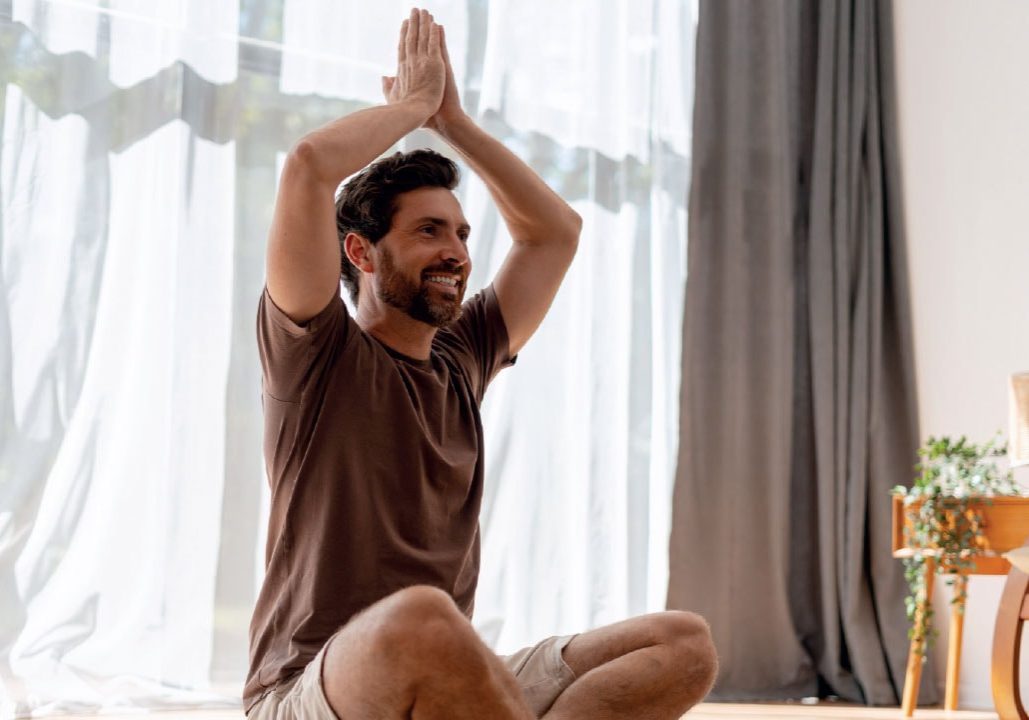
As yoga practitioners, the class space and self-practice offers the opportunity to practice remembering. We can practice the pathways towards good health and wellbeing, of moving inwards as we recognise physical sensations of breathing, of recognising the language of the body, and the quality of thoughts in the mind.
Practice requires us to be flexible and responsive to arising sensation, listening deeply within, adjusting, modifying, moving and resting according to our individual needs. Yoga is inherently a somatic practice for this reason, despite the yoga industry’s best attempts to lead us towards something more aesthetic. This mind-body connection is the connection that allows us to navigate from the internal to the external and back again. It allows us to be in a healthy relationship with ourselves and to hold our own when the going gets tough.
When that connection is severed it’s often because external demands have repeatedly required us to abandon ourselves and our needs, to stop us from listening to our bodies and to accept that our situations, relationships or other people are the priority. In the yoga class it’s when we do what the teacher offers without taking responsibility for what it feels like, but true practice with awareness is the work of mind and body simultaneously rather than body being separate from mind. It’s the work of repeatedly undoing the accumulation of amnesia and a return to remembering ourselves wholly and completely.
Practice with Lauren Bloxham online at www.sabda.uk, in person in West Cornwall, or on retreat: 21st – 24th May 2026 at ‘The Wild Medicine’ at Holwell Holistic Retreat, Devon. Listen to ‘The Honey Doctrine – Ancient Yoga, Modern Living’ wherever you get your podcasts.

Om Magazine
First published in November 2009, OM Yoga magazine has become the most popular yoga title in the UK. Available from all major supermarkets, independents and newsstands across the UK. Also available on all digital platforms.