

Somatic Therapy
Hormones and movement: the body knows the way. By Cheryl Kennedy MacDonald
There’s a quiet shift happening in how we understand health and healing. For years we’ve been told to think our way out of stress: To fix the mind first and the body will follow. But those of us who live and breathe yoga know it’s never that simple. The body holds its own stories, and if we want to truly heal, we have to listen to them.
That’s where somatic therapy comes in. Once considered an alternative approach by therapists, it’s now recognised as a grounded, evidence-based way to support emotional wellbeing by starting with the body itself. And if you’ve been teaching or practicing yoga for a while, much of this will feel beautifully familiar.
After more than 20 years of teaching yoga and supporting women through hormonal changes, from postpartum to perimenopause, I’ve seen first-hand how the body speaks long before the mind catches up. Somatic therapy gives language to that conversation. It’s about learning to move through what feels stuck, and to create balance again, through awareness.
So what exactly is somatic therapy?
In simple terms, it’s a body-based form of psychotherapy that helps us process emotion through physical awareness. It’s built on the idea that our body holds memories and experiences, especially the ones that feel too overwhelming to think or talk about. By working gently with breath, posture and small movements, we can begin to release that tension and re-regulate the nervous system.
For yogis, this probably sounds familiar. The awareness we cultivate through asana, pranayama and meditation is already somatic in nature. When I work with clients, I often use practices that overlap with yoga such as breathwork and deep interoceptive listening. The focus isn’t on perfect alignment; it’s more about noticing sensation, and emotions as they arise in real time.
This is the essence of both yoga and somatic work: coming home to yourself through the body.
Hormones play a huge role in this story. They’re our body’s messengers, quietly orchestrating everything from mood and sleep to energy and focus. Cortisol spikes when we’re stressed; oestrogen lifts our serotonin and keeps us balanced; progesterone soothes us and helps us sleep. When these fluctuate (through stress, our cycle, postpartum, or menopause,) the nervous system can easily tip off balance.
That’s often when we feel anxious, foggy, or low, even if we can’t pinpoint why. Somatic therapy doesn’t change hormone levels, but it helps the body adapt. It strengthens our internal rhythm, so we can move through those shifts with more steadiness.
In sessions, I might blend simple somatic practices with yoga techniques like grounding the feet before a standing pose or using breath to soften tightness. It’s less about structure, more about allowing the body to speak. Over time, these subtle practices help women feel more at home in their bodies again.
At the centre of all of this is the nervous system, the bridge between body and mind. It’s constantly scanning the world for signs of safety or danger, often below our awareness. When it senses threat, it activates fight, flight, or freeze; when it feels safe, we can rest, and connect.
In yoga, we’d call that returning to balance or to sattva. Somatic therapy works in the same way, helping the nervous system re establish a sense of calm. It might be through long exhalations, gentle rocking, or grounding through the hands and feet. These tiny shifts have a big impact. They signal to the body that it’s safe, and once safety returns, everything else follows: breath steadies, hormones regulate, and mood lifts.
Many yoga teachers already incorporate these principles instinctively by softening the breath at the end of a vinyasa or encouraging students to feel rather than perform. That’s somatic work in action.
Movement, of course, is at the heart of both yoga and somatic therapy. But here, movement is communication. It’s the body’s way of releasing what the mind can’t. Think of how animals shake after a fright to discharge tension. We humans tend to override that impulse. We sit still, we hold it in, and eventually, the body bears the weight of what we didn’t express.
I often invite clients to let the body move instinctively, to shake, sway, stretch, or simply breathe into what they’re feeling. In yoga, I’ve started weaving these natural, unscripted moments between poses. A class might pause for a collective exhale, a sigh, or a quiet shoulder roll. These aren’t just physical releases, they’re nervous system resets.
For women in particular, this kind of embodied work can be transformative. We live in a culture that prizes constant productivity, and too often we override our body’s cycles and signals. Through somatic and yogic practice, we can begin to honour those rhythms again: Resting when energy dips and noticing how the body shifts through each phase of the month, or each stage of life.
I’ve seen women rediscover themselves through this process. Sometimes it’s as simple as learning to pause before pushing on, or taking three slow breaths before reacting. Other times, it’s about releasing years of stored tension or grief. What I love most about this work is that it’s not about fixing anything; it’s about remembering how to listen.
If you’re a yoga teacher, bringing a somatic lens into your classes can be surprisingly simple. It starts with curiosity. Instead of guiding students straight into alignment, invite them to explore sensation first: How does this feel in your body today? What changes when you breathe into that space?
You might introduce grounding practices at the beginning of class such as feet planted, breath steady, awareness inward. Encourage students to notice their internal state rather than striving for form. Allow time for stillness, for integration, for emotion if it comes. The body always knows what it needs, if we give it permission to speak.
These small invitations can shift a class from performance to presence. And that’s where the real transformation happens Science is finally catching up with what yoga has known for centuries. Studies in neuroscience and trauma therapy show that the body plays a central role in emotional regulation and recovery. Approaches like Somatic Experiencing and Sensorimotor Psychotherapy are used worldwide to help people reconnect with safety after trauma. The basic principles of awareness, movement and breath, echo yoga’s ancient teachings.
For modern yoga practitioners, this intersection is exciting. It offers a language that allows us to teach and practice in a way that’s both deeply spiritual and neurologically sound.
At its heart, somatic therapy is an invitation to come home. This is the same invitation that yoga extends every time we step onto the mat. It reminds us that healing doesn’t start with the mind; it starts with the body. When we learn to listen, to breathe fully, we find our way back to ourselves.
In my work, I see this every day. A sigh that turns into a release. A tremble that becomes tears. A breath that opens into ease. The body always knows the way, we just have to give it space to lead.
Cheryl Louise Kennedy MacDonald is a psychotherapist, yoga elder and researcher specialising in women’s mental health, embodiment and life transitions. Founder of YogaBellies (yogabellies.com), YogaPause and Female Focused Therapy (femalefocusedtherapy.com), she integrates somatic and psychotherapeutic approaches with two decades of yoga teaching. Her work explores how movement, hormones, and identity intertwine to support women through every stage of life.

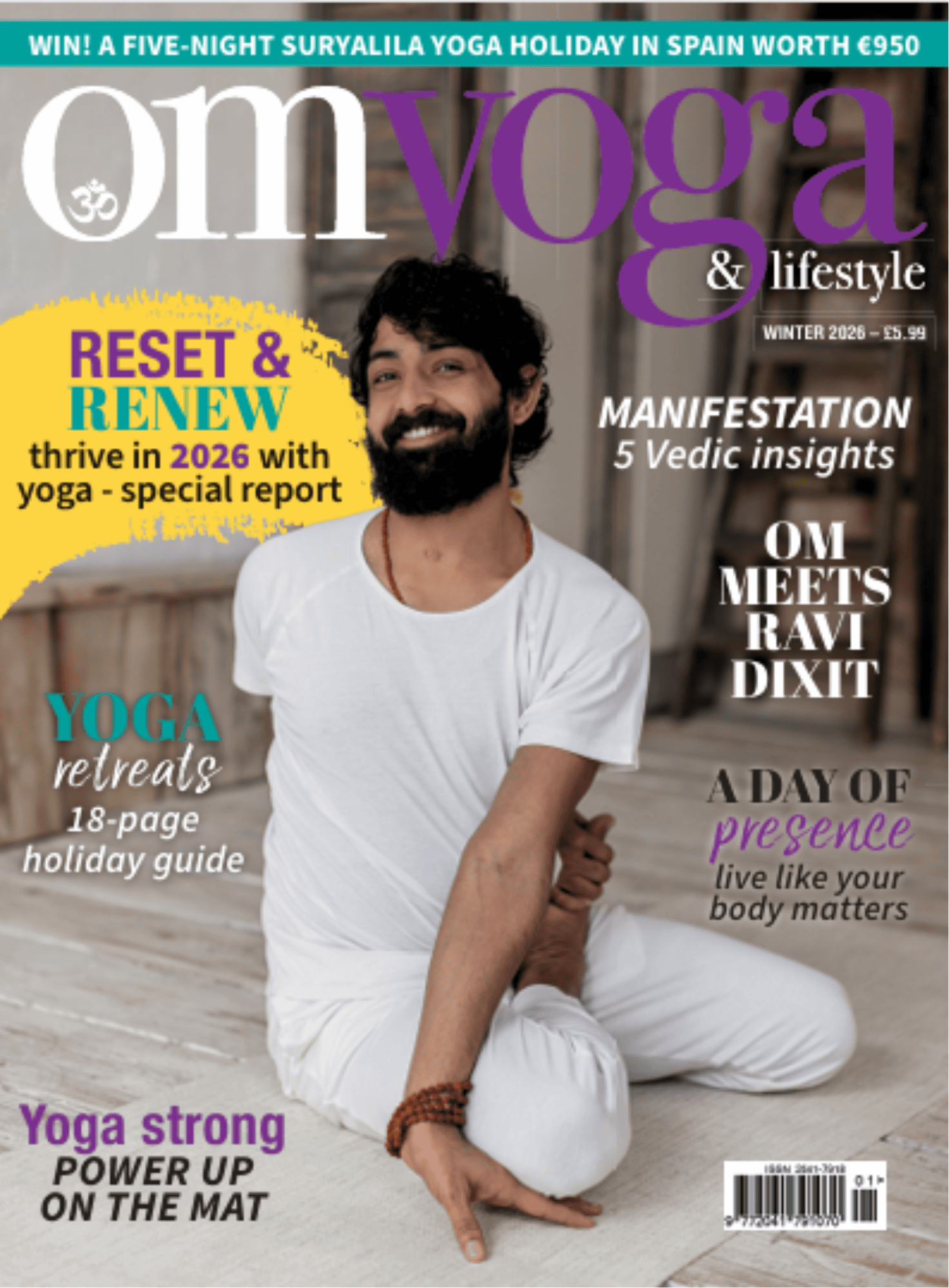
Om Magazine
First published in November 2009, OM Yoga magazine has become the most popular yoga title in the UK. Available from all major supermarkets, independents and newsstands across the UK. Also available on all digital platforms.