Advertisement
MAN ON THE MAT with Ravi Dixit
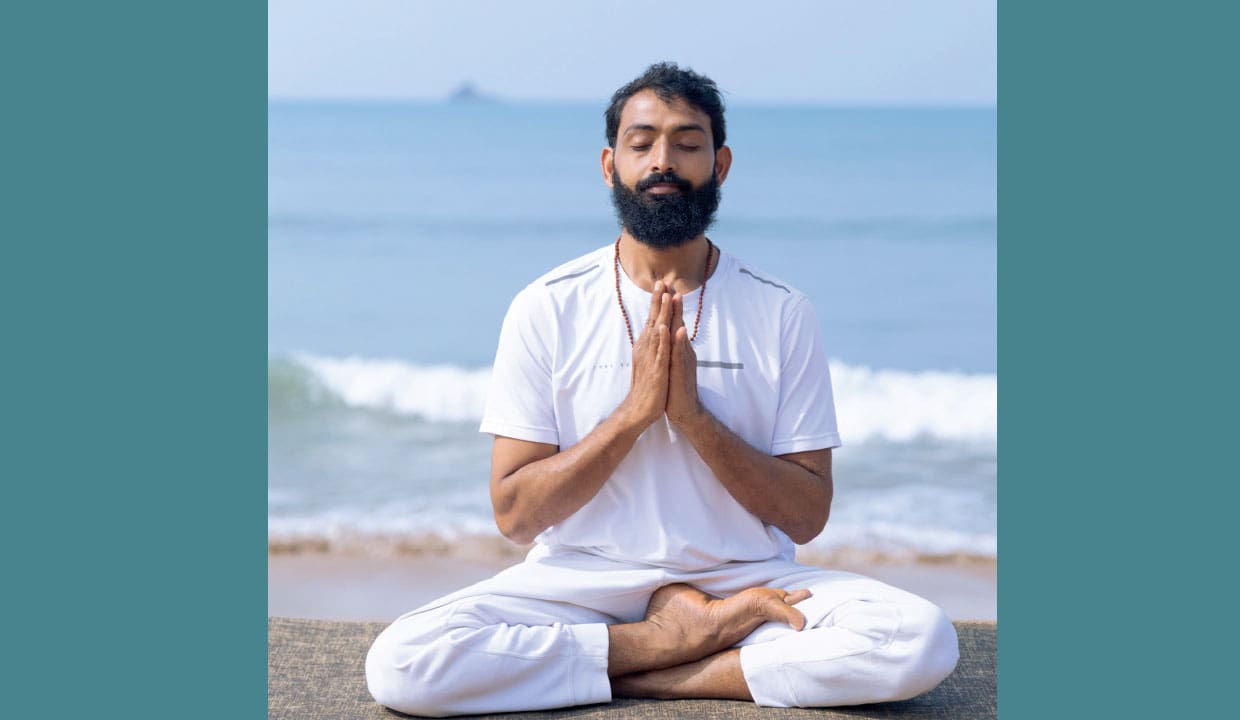
ARDHA PADMASANA
(HALF LOTUS POSE)
Ardha Padmasana is a classical seated posture that developed as a preparation for Padmasana (Full Lotus). Traditionally used for meditation and pranayama, it offers the stability of Lotus while being more accessible for most practitioners. In Hatha Yoga, it is understood that the body must be prepared gradually, and Half Lotus allows the hips to open safely while maintaining an upright and steady spine.
BENEFITS
- In Hatha Yoga, Ardha Padmasana is practiced as a meditative seat and as preparation for Full Lotus.
- This posture helps to open the hips and strengthen the muscles around the knees and ankles when practiced correctly. It encourages an upright spine and a steady body, allowing the breath to deepen naturally.
- Half Lotus creates stability in the lower body, which helps the mind to become calm. When the body is steady and comfortable, it becomes easier to focus during meditation and pranayama practice.
COMMON MISTAKES
- Not warming up: It is important to practice gentle hip-opening postures such as Titali asana (Butterfly) before attempting Half Lotus.
- Forcing the leg into position: The knee should never be pressured. The rotation must come from the hip to avoid injury.
- Placing the foot on the knee joint: The foot should rest high on the opposite thigh, not directly on the knee.
- A curved spine: The spine should be kept straight and lifted.
TIPS
- Listen to your body. The posture should feel stable and comfortable, not forced.
- Flex the foot of the lifted leg to protect the knee joint.
- Sit on a cushion or folded blanket if the hips are tight or if the spine begins to round.
- Practice on both sides to maintain balance in the body.
- If Half Lotus feels uncomfortable, begin with Sukhasana (Easy Pose) and progress gradually.
AWARENESS
- Ardha Padmasana helps to ground energy in the lower body while encouraging prana to rise through the spine. With the pelvis stable and the spine upright, the breath becomes slow and steady. The gentle pressure created through the crossed legs supports awareness in the lower chakras while maintaining length toward the crown. Focus on deep, even breathing.
- Allow the shoulders to relax and the face to soften.
- When the body is steady and the breath is calm, the mind naturally becomes quiet and prepared for meditation.
Ravi Dixit is an Indian yoga teacher and founder of Ravi Yoga Retreat, living between London and Goa. He is passionate about making traditional yoga understandable for everyone.
Visit: ravi.yoga or connect on Instagram @raviyoga_goa

Om Magazine
First published in November 2009, OM Yoga magazine has become the most popular yoga title in the UK. Available from all major supermarkets, independents and newsstands across the UK. Also available on all digital platforms.