Still Practicing Letting Go - Five Yoga Postures for Meeting Change
Holding on can feel like safety. There is comfort in the familiar, even when it is tight or outdated. And yet, through practice, many of us begin to notice something else: that letting go creates space.
Reading time: 4 minutes
There was a time in my life when I tried to follow a path that asked for certainty. I believed, as many of us do, that clarity came from choosing one way, one truth, one version of ourselves—and standing by it without wavering. Certainty can look like strength. Yet what stayed with me from that chapter wasn’t the structure or the rules. It was a quieter knowing: that this life may ask something different of us.
My relationship with yoga, meditation, and Buddhist thought has never been about identity or labels. I don’t practice becoming someone. Well to be honest, at least not anymore. For many of us, especially earlier on, identity and labels can feel important—a way to orient ourselves, to belong, to understand who we are not. Over time, practice can shift. It can become less about definition and more about how we are living. How we are relating and receiving. How we notice that change is happening. How we sense when something no longer fits, and how we allow ourselves to evolve without needing to defend who we used to be. There is a remembering here: that caring for ourselves, rather than managing how we are perceived, is often a gentler and healthier place to stand.
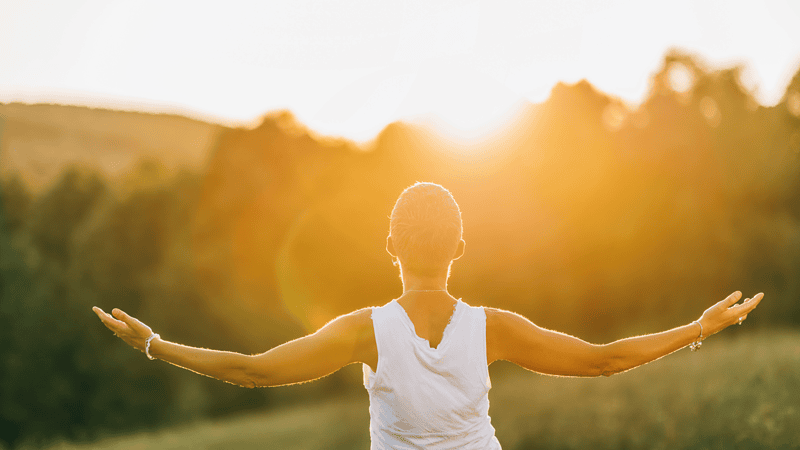
So much of our culture teaches us to hold on—to opinions, roles, relationships, even old versions of our healing stories. Holding on can feel like safety. There is comfort in the familiar, even when it is tight or outdated. And yet, through practice, many of us begin to notice something else: that letting go creates space. Space to breathe. Space to soften. Space to meet life as it actually is, rather than how we think it should be going.
Yoga is not only about form or technique. It is not about achieving the perfect shape or mastering a pose. At its heart, yoga invites flexibility in a deeper sense—flexibility in the body, the mind, and in how we meet ourselves over time. Steady without rigidity. Curious without attachment.
Certain postures return us to this truth again and again.
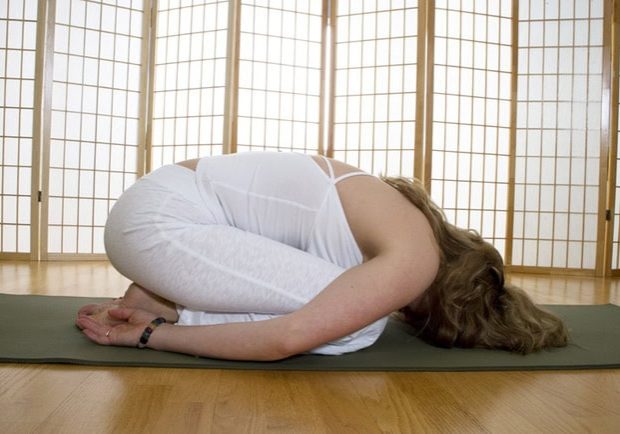
Balasana (Child’s Pose) offers a shape of surrender. Knees grounded, forehead resting, the body folds inward and down. There is nothing to achieve here. In this posture, we may remember that rest is not failure—it is a form of wisdom.
Uttanasana (Standing Forward Fold) invites release through gravity. As the head drops below the heart, the nervous system can soften. We allow the spine to hang, the jaw to unclench, the effort to loosen. There is a quiet humility in bowing to what is.
Eka Pada Rajakapotasana (Pigeon Pose) asks for patience. The hips, often described as a place where emotion and memory are held, meet time and sensation here. This posture can remind us that letting go is not always graceful. Sometimes it is slow, intense, and deeply human.
Supta Baddha Konasana (Reclining Bound Angle Pose) opens the body without effort. Supported, receptive, and exposed, we are invited to notice what happens when we stop pushing. When we allow. When we trust the body’s timing.
And finally, Savasana (Corpse Pose)—the most direct practice of release. Here, movement, intention, and control fall away. Nothing is required. Savasana points us toward something no active posture can: the quiet truth that stillness itself can be transformative.
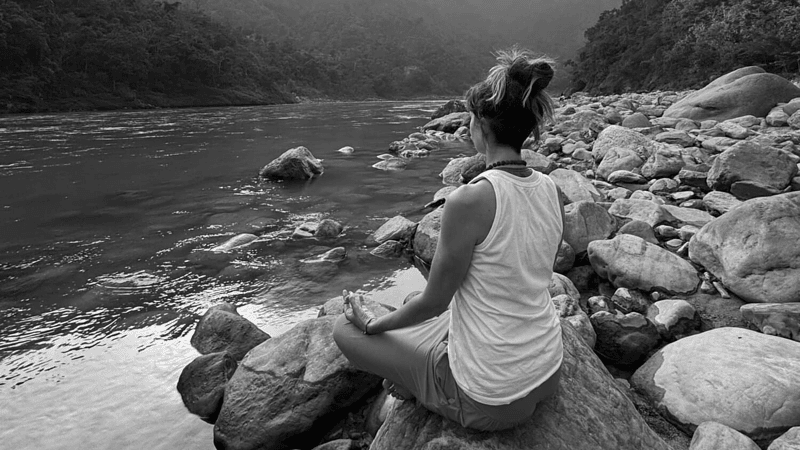
Meditation offers a similar invitation. We do not sit to control the mind or arrive at a particular state. We sit to witness. To observe the constant arising and passing of sensations, emotions, and identities. Some days the mind feels spacious and quiet. Other days it is restless or resistant. In practice, both belong.
Buddhist teachings often return to the idea that suffering does not come from change itself, but from resisting it. Many of us recognize this in our own lives. The moments of greatest tension are often less about what is happening and more about what we are trying to preserve. Letting go does not mean disengaging from life. It means participating fully, without gripping so tightly.
We are still practicing.
Still learning.
Still letting go.
There may be no final version of ourselves waiting at the end of the path. And for some of us, that is what feels most freeing. Yoga offers a way to meet each moment with presence rather than certainty, with openness rather than defense. A way to trust that change is not a failure of practice, but part of its wisdom.
This is not a practice we complete. It is one we return to, again and again, with humility and curiosity—a lifelong conversation between breath, body, and becoming.

Mellara Gold
Mellara Gold is an embodied practice teacher and writer rooted in yoga, mindfulness, and contemplative traditions.