Why Yoga Begins With the Breath
Every time I step onto my mat, I remember something simple: yoga isn’t about how far you can bend or how long you can hold a pose. It begins, always, with the breath.
Reading time: 4 minutes
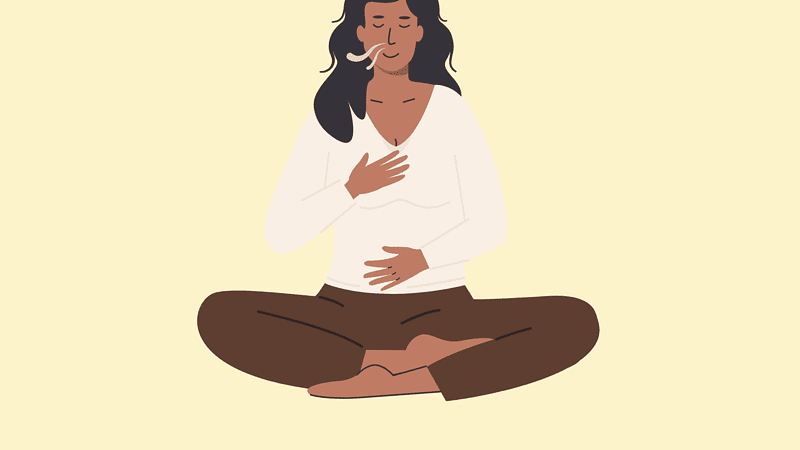
Breath is something we carry quietly with us, every moment of every day. Yet so often, we forget to notice it. It moves in and out without effort, without asking anything of us. And still, the breath is a companion—patient, steady, ever-present. In yoga, this life force is called prana. When we practice pranayama, or conscious breathing, we’re not trying to control it. We’re learning to listen.
I’ve noticed, both in my own practice and in the students I teach, that the breath tells a story about what’s happening inside us. When we are anxious or stressed, it becomes short, tight, and shallow. When we are calm, it deepens naturally. And when we pause to notice it, we give ourselves permission to soften—in the body, in the mind, in the heart. There is a quiet magic in that pause. Even a single full inhale and exhale can make the world feel a little lighter.
The breath is the first teacher of yoga. On the mat, it quietly leads the way. Each inhale invites space, length, and lift. Each exhale invites release, grounding, and surrender. Breath shows us when to move, and when to rest. It creates rhythm, balance, and awareness. The more we follow it, the less we feel the need to force, push, or judge.
I see this so clearly with adults returning to yoga later in life. Breath-led practice supports strength, flexibility, and balance, but it also fosters patience, self-compassion, and trust. Yoga becomes less about what the body can do, and more about how it feels in each moment. And the breath teaches us that there is wisdom in slowing down, in pausing, in simply noticing.
The beauty of conscious breathing is that it doesn’t stay on the mat. It travels with you into your daily life. A few mindful breaths can calm a racing mind, ease tension in your shoulders, or bring you fully into the present moment—whether you’re at your desk, walking to the bus, waiting in line, or lying awake at night. The breath is always there, always available. You can carry it with you, like a quiet friend offering support whenever you need it.
Breath also speaks to the nervous system in a way that words cannot. Slow, gentle inhales and longer exhales signal to the body that it is safe to rest. In a world that often encourages us to rush, multitask, and overthink, the breath reminds us to pause, to arrive fully in our bodies, and to let ourselves be present. There is no need to fix anything; simply noticing the breath can be enough.
I have often watched students arrive on the mat carrying tension, worries, or fatigue. Within a few minutes of connecting with their breath, their posture softens, their faces relax, and a sense of ease begins to settle. The breath is the first door we open to relaxation, presence, and self-awareness.
The breath also teaches patience and acceptance. We may want to hold a pose perfectly, or push beyond what feels safe. But when we follow the rhythm of our breathing, we learn to honour our limits. We learn that yoga is not about forcing the body into shapes, but about arriving where we are, moment by moment. And in that arrival, there is a deep, gentle satisfaction.
Breathing mindfully also allows us to notice subtle energy shifts. We may recognize tension held in the jaw, heaviness in the chest, or tightness along the spine. With each conscious inhale, we invite space. With each exhale, we release what no longer serves us. Over time, this small practice cultivates awareness, resilience, and a sense of inner peace that is available even in the midst of life’s challenges.
What I love most about the breath is how it brings us home—to ourselves, and to the present moment. We often look outside for calm, for clarity, for balance. But the breath reminds us that it is already here, always waiting for our attention. It doesn’t need to be earned or achieved. It simply needs to be noticed.
This practice of returning to the breath can extend beyond the mat in small, meaningful ways. A few conscious breaths while waiting for an appointment, during a stressful conversation, or while walking outdoors can shift our internal state entirely. It is a gentle, portable practice that nurtures presence, self-compassion, and calm.
The breath also reminds us that yoga is not a performance. There is no ideal pose, no “perfect” alignment. Yoga is a conversation between the body, the mind, and the breath. And when we listen to the breath, we enter into that conversation with openness, curiosity, and care.
Ultimately, the power of breath lies in its simplicity. It asks nothing, yet it gives everything. It reminds us to slow down, to soften, to arrive fully in the present. On the mat, in life, in moments of chaos or calm, the breath is our touchstone. It is a companion, a guide, a teacher.
Sometimes, all it takes is a single inhale. And then a single exhale. That is yoga. That is presence. And that, more than anything else, is enough.

Josie Ferrara
Dedicated RYT-200 yoga teacher, specializing in Hatha,Vinyasa and Restorative. Inclusive classes focus on alignment and breath. Decades of practice; fostering well-being.