Vibration is a physical movement that repeats back and forth, and frequency is a measure of how often that movement happens each second, usually described in hertz (Hz).
Having seen first hand how sound can support people experiencing pain, insomnia, and stress, I feel strongly that it should be more widely available. I truly believe we need nourishing frequencies as much as we need sunlight, water and rest.
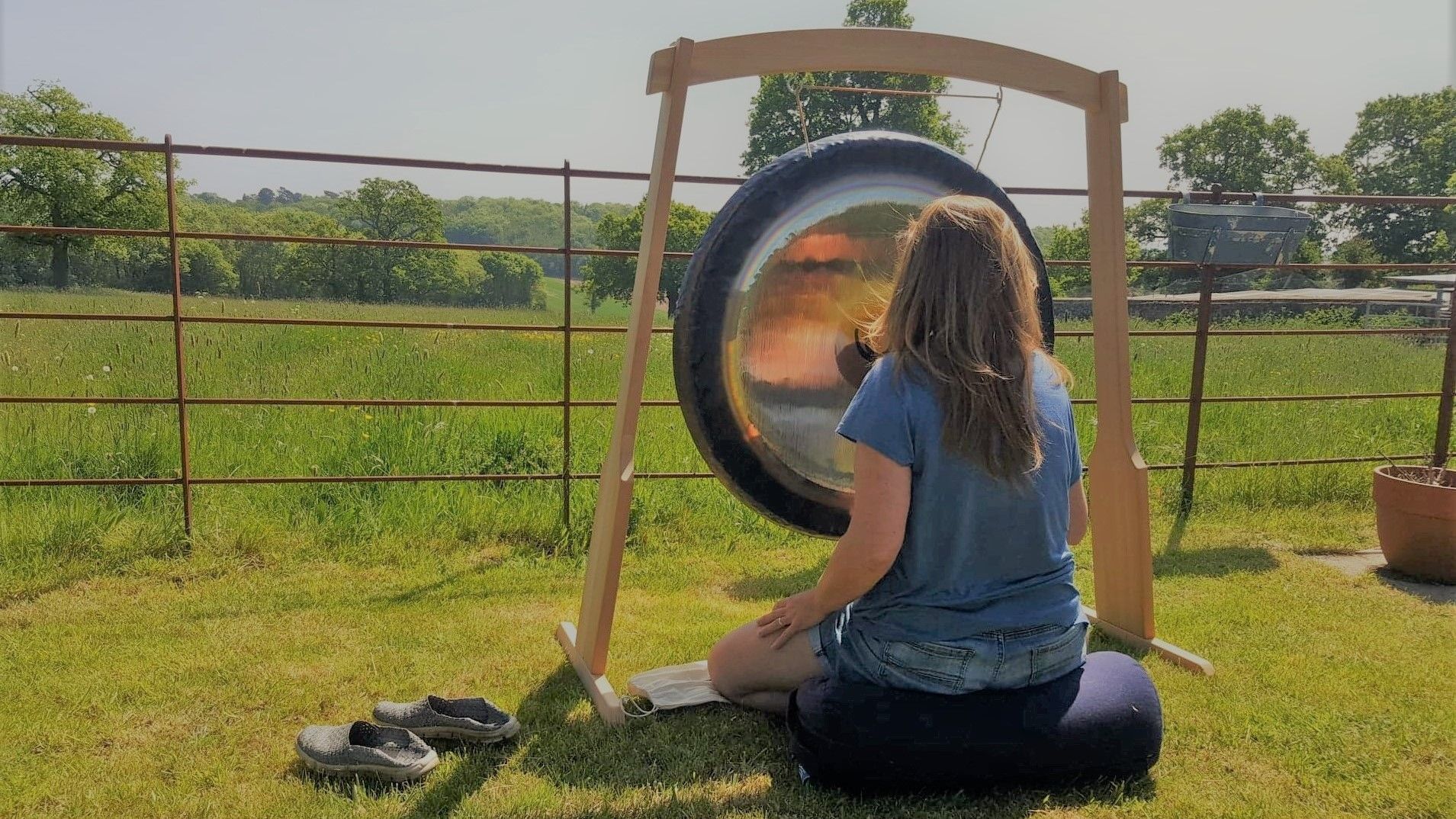
Among the most powerful tools in sound therapy are gongs, which produce a rich spectrum of tones that can be felt as well as heard. Practitioners may also work with singing bowls, tuning forks, drums, shruti boxes, bells, and conch shell horns and of course let us not forget the voice.
Each of these instruments offers a different texture of sound. Bowls can create shimmering, sustained tones, tuning forks can deliver precise frequencies on or near the body, drums can offer grounding rhythms that help people feel more grounded, present and embodied.
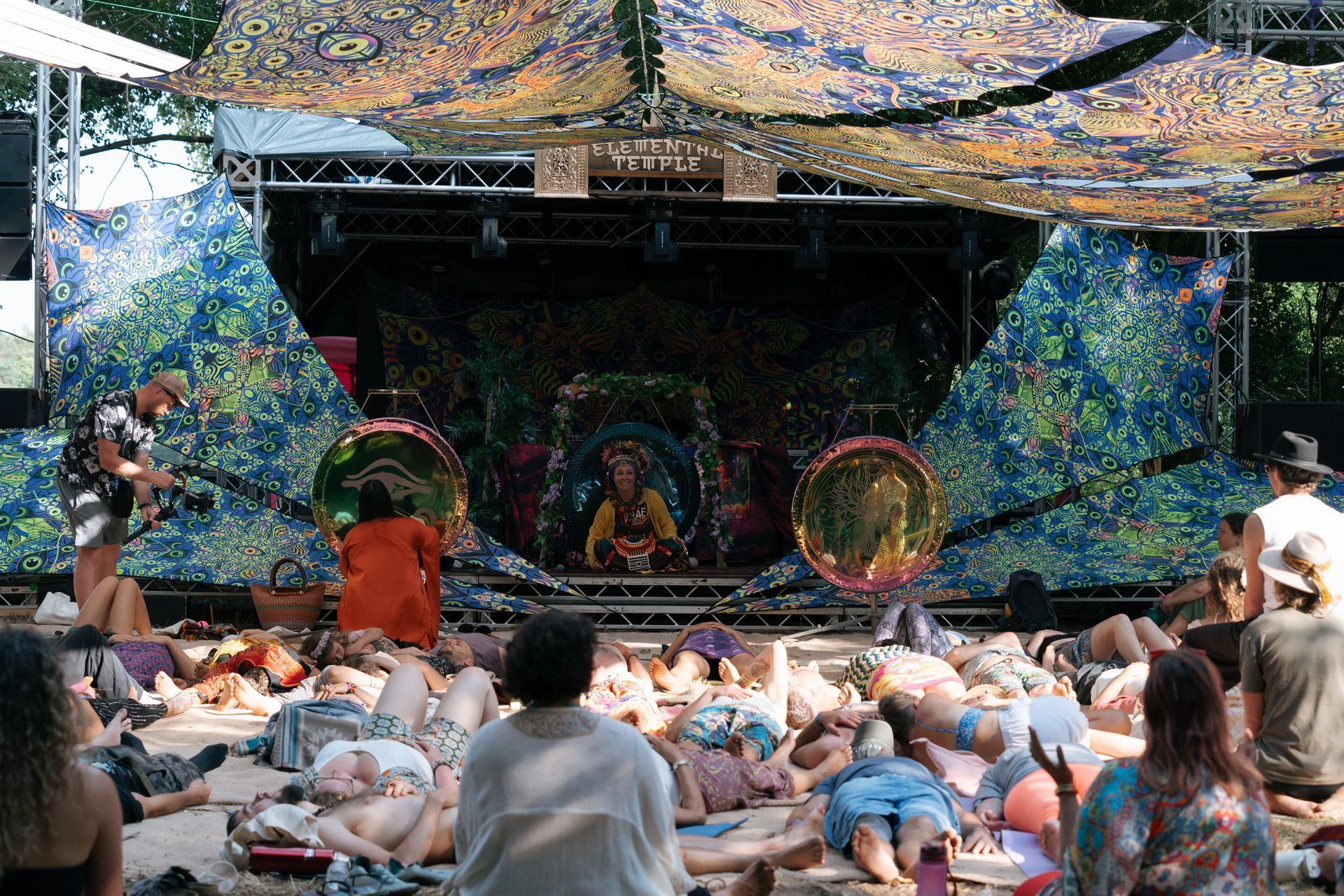
When combined with a clear therapeutic intention, these sound frequencies create an immersive environment known as a sound bath or gong bath.
It is such a relief to see that modern research is beginning to explore why sound therapy may have such a profound effect on us.
Scientists at Kyoto University have reported that audible sound waves can directly influence cells, affecting gene activity and cellular behaviour. This suggests that our bodies do not only hear sound through the ears, our cells also respond to frequency at a very fundamental level. Early studies in vibroacoustic therapy and music medicine also indicate that certain frequencies and rhythmic patterns may help reduce perceived pain, lower heart rate, and support the body’s natural relaxation response.
Some studies suggest that sound baths help improve the behaviour of blood cells and support healthy circulation and rehydrate. As adults are composed of around 60% water, it is easy to understand why sound frequency is often experienced so deeply in the body.
Many people report feeling calmer, more grounded, and refreshed after a sound therapy session. Participants frequently describe sensations such as gentle waves moving through the body, a softening of muscular tension, or a feeling of spaciousness in the mind. These subjective experiences are an important part of the emerging picture of how sound-based practices may contribute to integrative health.
Sound therapists also consider the brain’s natural wave patterns. Brain activity is often described in terms of beta, alpha, theta, and delta waves. Beta waves are typically present during normal waking consciousness, problem solving, and focused mental activity.
When beta activity remains very high for long periods, it can be associated with stress and mental overload. Carefully designed soundscapes may help guide the brain from hectic beta states towards more balanced patterns, supporting relaxation, clarity, and emotional regulation. Alpha and theta states are often associated with meditation, daydreaming, and deep creative thinking, and many people find that gong and sound sessions give them access to these more contemplative states, even if they struggle with traditional silent meditation.
Some holistic researchers, such as the late Bruce Tainio, have suggested that the human body may have an optimal overall vibrational range, and that lower average frequencies might be associated with fatigue, illness or reduced wellbeing.
Although more scientific study is needed to confirm and refine these ideas, many practitioners use the concept of vibrational health to explain why lifestyle, environment, and therapeutic practices, including sound therapy, may influence how we feel. The sounds we surround ourselves with, from natural soundscapes to urban noise, can subtly affect mood, energy, and sleep, and sound therapy offers a way to consciously choose more nourishing sonic environments.
From a physiological perspective, the sustained tones and gentle rhythms used in sound work can support a shift from the fight orflight stress the Amygdala response towards the rest and digest state governed by the parasympathetic nervous system.
Breathing may deepen, muscle tension can soften, and people often describe feeling calmer and more connected to themselves after a session.
In a group gong bath, this can be amplified by a sense of shared experience and community, as individuals rest together in a safe, held space.
Responses are always individual, and no specific outcomes can be guaranteed, but these effects can sit alongside conventional and complementary approaches to health and wellbeing.
I am a London based sound therapy practitioner and teacher, founder of Gongfree, and co founder of Gong Temple with the Legendary Kwali Kumara a renowned Kundalini Master, one of the first to introduce a Gong with her yoga practice in London, an artist with 6 acclaimed Mantra albums.
Gong Temple is an accredited sound therapy school by Gongfree recognised by the Complementary Medical Association, IAOTH, and IGCT.
Together, Kwali and I have been committed not only to sharing the transformative potential of gong work, but also to raising standards in training by offering a comprehensive approach that extends beyond instrument technique alone.
Our teaching includes not only gong playing, but the deeper skills of listening, intention, harmonics, overtoning, breath, energetic awareness, and the sensitive facilitation of both one to one and group sound journeys. Students are also introduced to a wider sound toolkit including shruti, conch, bells, tubes, tuning forks, drums, and singing bowls, giving them a broader and more integrated foundation as practitioners.
Through my work, I have seen how gong sound therapy can support people looking for gentle ways to reduce stress, explore meditation, and deepen self-awareness. I was particularly drawn to sound because, when applied correctly by a skilled and experienced practitioner with a clear understanding of volume control, pacing, striking technique, and the way the gong responds,it can bring a profound sense of relief, mentally relaxing the listener and, for some, even helping ease chronic pain or insomnia.
The art lies in listening to the room, the individuals present, and the gong itself, creating a carefully modulated journey rather than simply producing loud or dramatic sound.
My interest in this field is also personal. I have known someone who was prescribed opiate based painkillers and antidepressants, and I saw first hand how important it is to have wider options of support.
Sound therapy is, of course, a holistic practice and should be used alongside Western medicine after diagnosis, not instead of it. For some people it becomes a regular complementary practice that sits alongside talking therapies, physiotherapy, yoga, mindfulness, and other supportive modalities.
The emphasis is on working with the whole person, body, mind, and emotions and offering a non judgemental space where people can simply rest and listen.
Gong Master Don Conreaux has been a key figure in bringing gong-based sound work to the United States and UK. Over many decades he has helped bring the gong into meditation, yoga, and therapeutic settings around the world. His teaching has inspired many practitioners and schools dedicated to using sound as a tool for wellbeing and personal growth. Don’s approach honours ancient gong traditions while encouraging creative, intuitive exploration, and he has played an important role in shaping what many people now recognise as contemporary gong therapy.
My short film, Journey Into Gongs and Sound Therapy with Don Conreaux, was created to introduce people to the world of gong sound therapy through Don’s wisdom and experience. The film, which has now received more than 1.6 million views online, offers a poetic and cinematic glimpse into his work with sound and has helped bring gong therapy to a much wider public audience. At a time when sound therapy is moving from niche interest into the mainstream, this kind of accessible educational resource feels especially important.
As interest in the field grows, so too does the need for high quality, ethical, and well-grounded training. This is one of the reasons why the work we do at Gong Temple matters so deeply to me. Kwali Kumara and I have shaped our school around both lived facilitation experience and a broad, practice based understanding of sacred sound. Our training is informed not only by study, but by years of holding space at festivals, public events, ceremonies, and transformational group settings. In this way, students are supported not only in learning techniques, but in developing presence, sensitivity, discernment, and professionalism as practitioners.
The film invites viewers to experience how layered gong tones may affect both mind and body. It touches on key ideas such as cellular responses to vibration, shifts in brainwave activity, and the importance of creating a safe, supportive environment for sound work. By combining artistic imagery with clear educational messages, it aims to be both an introduction for those who are curious about sound therapy and an inspiration for practitioners wishing to deepen their understanding. My hope is that it encourages viewers to approach sound work with both openness and discernment, recognising its potential while respecting its limits.
Sound therapy does not replace medical treatment and is best viewed as a holistic, rather than alternative, therapy. However, it can be a gentle and non-invasive way to support stress reduction, emotional balance, and self awareness. As interest in integrative health continues to grow, accessible resources such as Journey Into Gongs and Sound Therapy with Don Conreaux can help more people discover how sound and vibration may support wellbeing. By bringing together tradition, emerging science, skilled training, and lived experience, gong and sound therapy can offer a doorway into deeper listening to sound, to silence, and to ourselves.
Contact details:
Joanna Bilik
Gong Temple and Gongfree – Sound Therapy School
Email:
jo@gongfree.com
Phone: 07973
353 815
Website:
https://gongfree.com/home
https://gongtemple.co.uk
To watch Journey Into Gongs and Sound Therapy with Don Conreaux, visit:
https://youtu.be/xtoKLCsbF7s