Disappointment and questions followed : was I moving away? Had a new job? I said I needed a break but, really, I was holding back. I so wanted to explain - but how could I when I felt such a failure and had lost confidence in myself and the practice itself.
I questioned how helpful yoga asana really was. I had started to get injuries and some students, even with modifications and props, still struggled. If I was injuring myself, what was I passing onto my students? I had to pause; I needed to know if I was meant to teach, needed time to find the missing pieces in my understanding of movement and asanas.
Away from teaching I felt like a lesser version of myself, a piece of me was missing - which at least clarified that I was meant to teach!
With divine timing - I came across a book: “Anatomy and Asana - Preventing Yoga Injuries” by Susi Hately I felt drawn to her work, took her trainings, spent thousands traveling to Canada to qualify as a yoga therapist striving to understand and deepen my knowledge. Still something I felt something was missing.
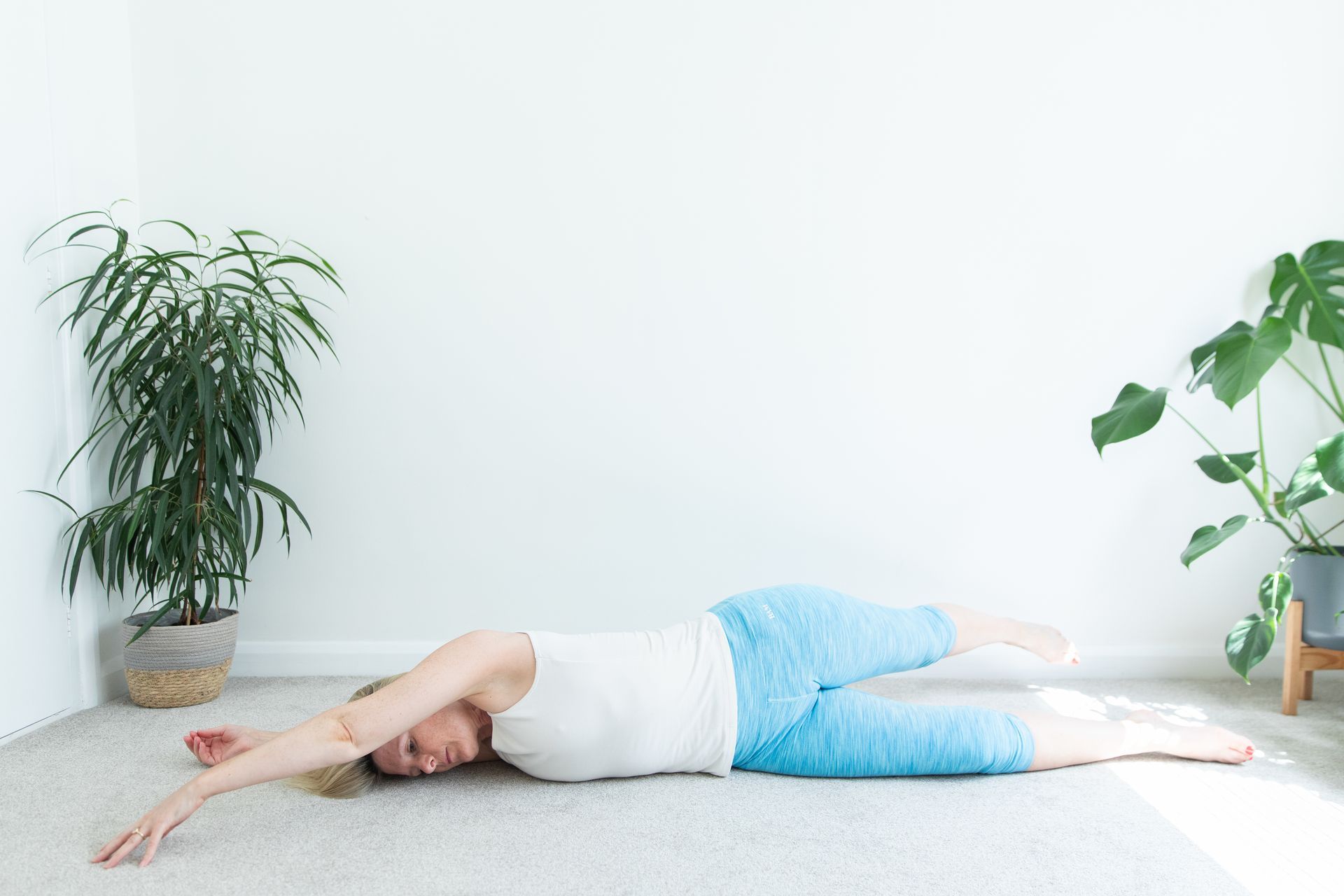
I wondered: do we really need so many props and specialist equipment? The cost and inconvenience of buying and then lugging those extra props to class - how does that encourage people to continue their practise at home? How many times have you bought something like a “back bender” only for it to be relegated to the cupboard? (One benefit of Clinical Somatics is its simplicity, you just need floor space and maybe a blanket - or a chair if getting on the floor is difficult).
After my training I kept in touch with my mentors. Some of them started to talk about Somatics - hadn’t we explored some of that in my initial YTT? I remembered enjoying moving somatically, enjoying the contrast between the two hours of morning vinyasa, and the afternoon of what my teacher
Don Stapleton called “Self Awakening Yoga” which was very experiential and somatic in its approach. Now I realise it had a Feldenkrais style to it - but I still wasn’t ready in 2005 and I chose to teach a more Hatha style, infused with a vinyasa or two. But then I discovered a world of difference in Somatics and Clinical Somatics, the work of Thomas Hanna - the work that changed my life.
I took my first Clinical Somatic training in 2016 - and cried with relief as my back muscles actually relaxed, not because I propped a bolster underneath my knees or tried Apanasana again, but because I learned a specific neuro-muscular technique called “Pandiculation” which gently and easily relaxed my back like magic; no amount of stretching and strengthening had achieved that.
This was an ‘A-hah’ moment: stretching can actually make you tighter and I was stuck in that loop - when I stretched the “Myotatic reflex” was triggered. Why had I never learnt about this in all my yoga trainings?
A key principle in Clinical Somatics is understanding the three Somatics Reflexes, how stress, anxiety and daily living habits (sitting long periods, head down looking at phones, driving, working under pressure) trigger these reflexes and, once habituated, no amount of stretching, strengthening, or relaxation techniques can help. Once you understand these reflexes and the tension patterns they create it is a game changer: you can read your own and your student’s posture AND, crucially, find the missing pieces as to why some students can easily back bend freely in Bhujangasana, why others over-work their neck and have pain in their lower back, why shoulders lift in Virabhadrasana 2, why Paschimottanasana is a breeze for some; the real reason hamstrings won’t let go, why glutes are “lazy”. There’s so much more to this incredible practice too!
If you are a struggling yoga teacher or student and feel (but daren’t admit) that your practice might be making you tighter or causing pain - it might not be the practice, but the reflex you or your students are unconsciously living with.
I really don’t want you to give up what you love, but learn how this incredible practice gives you freedom in movement, teaches you pain-relieving exercises and regulates your nervous system with simple, organic movements.
Join me for a two hour online workshop “See The Patterns - An Introduction Clinical Somatics for Yoga Teachers”on Tuesday 10th November at 7 pm GMT where you’ll learn about the reflexes and principles and experience this incredible practice.
Liz Underwood is a Certified Clinical Somatic Movement Educator, Yoga Therapist and Yoga Teacher.
Book Here -
https://momence.com/Intelligent-Movement/See-The-Patterns---Clinical-Somatics-for-Yoga-Teachers/144951458